Home subscribe manage Las Vegas Review-Journal
  Jobs Cars Homes Shopping Travel Weddings Golf Best of Las Vegas Photo   Search:

RECENT EDITIONS
Wed Thu Fri Sat Sun Mon Tue

Business


Drops in LV home prices lead the U.S.

No quick turnaround, analyst says


NEW YORK -- Home prices in many cities, led by sharp declines in Las Vegas and Miami, continued to plunge by record levels in January as sellers cut their asking bids and rising foreclosures took their toll, new data showed Tuesday.

Although the spring selling season usually gives the market a bounce, some analysts say any notable improvement may not come until well into the summer. U.S. home prices fell 10.7 percent in January, and the Standard & Poor's/Case-Shiller home price index of 20 cities saw the steepest decline in the index's two-decade history.

Newsvine Digg Fark Technorati reddit StumbleUpon del.icio.us Slashdot Propeller Mixx Furl Twitter MySpace Facebook Google Bookmarks Yahoo! Bookmarks Windows Live Favorites Ask MyStuff myAOL Favorites

Most Popular Stories
  • Residence in Summerlin sold for $11.5 million
  • Blocked club door sparks lawsuit, accusations of racism
  • MORTGAGE PAYMENTS SLASHED: BofA deal will help Nevadans
  • HOUSING: FORECLOSURE WOES RISE
  • INSIDE GAMING: That thud? It's casino stocks crashing
  • HOUSING SECTOR: Economic woes hit home
  • NEVADA ECONOMY: STILL ON A LOSING ROLL
  • Gaming board confident Aliante can survive times
  • Hurricane fallout brings end to bid for Golden Nuggets
  • CRUNCH GOES COMMERCIAL


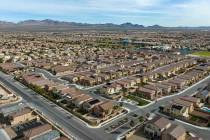
  • Las Vegas and Miami both reported 19.3 percent drops, as the regions are still paying the price for rampant speculation and overbuilding during the boom years. Those cities and 14 others, including Phoenix, San Diego and Detroit, posted record lows.

    "I wouldn't be looking for a pattern of improvement until April, May or June," said Brian Bethune, Global Insight's chief U.S. economist.

    Only Charlotte, N.C., squeaked by as a gainer in the Case-Shiller index, with a 1.8 percent rise in January compared to a year earlier.

    "We are still selling here in Charlotte," said Dianne McKnight, a broker associate at Re/Max Executive Realty in the city. "If a property is priced right, it sells in a day and you have multiple offers. There are plenty of buyers out there kicking around."

    But the overall downbeat figures come on the heels of data released Monday showing that the median price of existing homes being sold in February fell in the largest year-over-year drop since at least 1999.

    "Home prices continue to fall, decelerate and reach record lows across the nation," said David Blitzer, index committee chairman at S&P. "No markets seem to be completely immune from the housing crisis."

    Blitzer said all 20 cities S&P tracks have seen falling prices for five consecutive months when compared to the prior month. What's more, the declines are growing in severity, with 13 of the 20 cities reporting their biggest single monthly decline in January.

    Las Vegas-based SalesTraq reported a median existing home price of $250,000 in February, down 13.2 percent from the same month a year ago. That followed a 14.1 percent decline in January.

    SalesTraq President Larry Murphy said he was doing research on the housing market in Pahrump, about 50 miles southwest of Las Vegas, and found stories from 2004 about how land prices had doubled and developers were selling more lots in three months than they had in the previous 10 years.

    "It gave me pause to think here we are four years later and it's hard to believe the attitude and mind-set of everybody back then, that it would last forever and you'd better get on the bandwagon," Murphy said. "Four years later it's doom and gloom and we feel like this is going to last forever. We're just in these real estate cycles. What's it going to be like four years from now?"

    A narrower survey, released separately Tuesday by the Federal Housing Enterprise Oversight said home prices fell 3 percent in January from the same month last year, and dipped 1.1 percent from December.


    Leave Your Comment 7 Reader Comments
    Terms & Conditions
    The following comments are provided by readers and are the sole responsiblity of the authors. The reviewjournal.com does not review comments before publication nor guarantee their accuracy. By publishing a comment here you agree to abide by the comment policy. If you see a comment that violates the policy, please notify the web editor.

    Some comments may not display immediately due to an automatic filter. These comments will be reviewed within 48 hours. Please do not submit a comment more than once.
    Current Word Count:

    Patrick wrote on March 26, 2008 09:00 PM: Homeless in Las Vegas is correct in my opinion. The "real" employment in Vegas, and the entire United States does NOT have the wages necessary to keep the population in its current lifestyle. Home prices along with utilities, gasoline, food, entertainment, insurance, etc..all needs to drop about 75%.


    Money Trees grow in Fantasy Land wrote on March 26, 2008 04:51 PM: Homeless in LV- I suggest you move to LA. You will have it easier there. Did you know that Vegas prices are at the Natioal Average? Maybe you should move down South: Ala., Miss., etc.


    homeless in Las Vegas wrote on March 26, 2008 12:59 PM: There was only one way for prices to be sustained at any level and that is the cost of living index. Either wages have to increase or housing prices must drop to encourage the influx of new residence to buy. It won't matter how many new resorts or developments open up within the next few years. If it is not financially feasable to live here, those new residents will either not come at all or they will choose to rent. Las Vegas wages do not support home ownership.


    TimeRanger wrote on March 26, 2008 12:36 PM: Gee, you mean that prices are actually starting to reflect the actual value of the properties, instead of the bloated prices forced upon them by speculators??


    Furious wrote on March 26, 2008 09:11 AM: To polyannas like Mr. Murphy, anything short of a speculative bubble is "doom and gloom." They're like junkies who aren't satisfied unless they're in the throes of an unsustainable rush. The "mindset" of 2004 wasn't the top of a real estate cycle. It was liquidity-induced mania, outside the bounds of any normal cycle. And, at the risk of sounding doom-and-gloom, the damage will take more than four years to undo.


    wl wrote on March 26, 2008 08:54 AM: We're house-hunting. All reports are saying that prices are falling, yet many sellers aren't getting the news, or trying to ignore it.

    There is an enormous number of homes for sale, 142 show up in our very tight search of the MLS, yesterday. The "asking" prices are in a huge range for similar houses. Dozens are foreclosures, and are starting to increase dramatically with plummeting sale prices. This is putting even more pressure on sellers.

    There is no bottom in sight yet, and that's reality from our perspective. Those who bought at the top are seeing the "true" value of their homes cratering. I feel bad for them, but that's what's going on. Those who are trying to sell have no chance whatsoever until they find a price that's going to get it done, and from what we're seeing, that price is far, far below what anyone thinks.

    Until credit becomes available--it's not at all at the moment--and the supply shrinks, the end is a long way off.


    rg wrote on March 26, 2008 08:31 AM: For the short term (next 12 months or so), we can expect sales and home prices to be squeezed. However, consider this: Las Vegas, whether you love it or hate it, is the most favorite domestic tourist destinations but also ranks very high with the international community. With the demand for hotel rooms comes all the related supply sources such as food, medical, housing, etc. etc. What I believe will play a very important part relative to the housing slump in the next couple of years is the demand by foreigners, particularly, Asia and European buyers to cash in and purchase middle and high end hotels and condos at "bargain prices" We must also recongnize that this downward cycle is really a normal part of real estate capitalism which has happened many times in the last 40 years only to recover and reach new heights. Have patience and try very hard to hold on.