The trains, designed to go up to 220 mph, will be able to take Brightline West passengers between Las Vegas and Southern California in less than two hours.




The trains, designed to go up to 220 mph, will be able to take Brightline West passengers between Las Vegas and Southern California in less than two hours.

Margaret Rudin, whose 2001 murder conviction in the death of her husband was overturned by a federal judge, filed a lawsuit against the state of Nevada on Thursday.
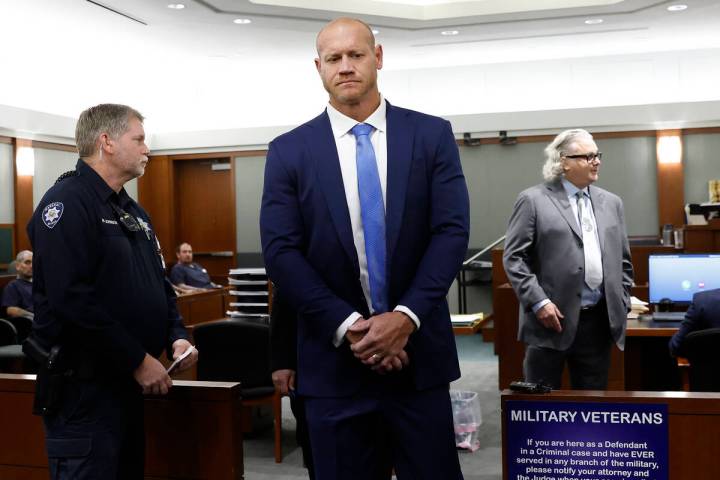
Grand jury transcripts provide more details in the murder case against the former pro wrestler and House candidate Daniel Rodimer, who denies the allegations.

Former Raiders linebacker Bill Romanowski and his wife are mired in a civil case brought on by the U.S. government alleging they owe more than $15.5 million in taxes.

The Lovers & Friends fest, San Gennaro Feast and comedian Matt Rife top this week’s entertainment lineup.

An executive explained why Bally’s is in no hurry to produce plans for a resort that would be attached to the Oakland Athletics’ stadium at the Tropicana site.

The Aces waived two rookies Thursday and must make two other roster moves before the WNBA’s final cutdown day May 13.

The land will soon be transferred to UNLV and the city of North Las Vegas from the Bureau of Land Management.

The Golden Knights didn’t face elimination during their Stanley Cup championship run last season. They need a win Friday to stay alive in the first round.

Scott Sibella, former president of MGM Grand and Resorts World, faces sentencing in California and is the subject of a Nevada Gaming Control Board complaint.

Millions of dollars stolen from Shohei Ohtani to pay his former interpreter’s gambling debt were funneled through Resorts World, according to ESPN.

The Animal Foundation has 10 puppies named after Golden Knights players that will soon be available for adoption.

The Utah-based indoor pickleball chain, Picklr, announced when it would open its first location in Clark County.

The Review-Journal has agreed to give prosecutors, police and defense attorneys the majority of files from the phone of slain investigative reporter Jeff German.

Influencers are everywhere in 2024. No matter what industry you find yourself in or which ad you see on TV, you will always encounter someone promoting something about it or in it. Influencers are huge on social media, especially Instagram. But what exactly is an influencer? Is an influencer just another person fake promoting a […]






Promoter Live Nation has announced the return of its annual “Concert Week,” which gives fans access to $25 tickets for music and comedy shows across the Las Vegas Strip.

The stained glass above the Tropicana’s former casino pit is being removed while the shuttered casino prepares for a fall demolition.

A war of words between Canelo Alvarez and Oscar De La Hoya escalated during Wednesday’s news conference to promote Alvarez’s fight against Jaime Munguia.

A man is facing seven felony charges after using a truck to attack two people at the Las Vegas retail center, according to a Metropolitan Police Department report.