Quantcast
Home manage Las Vegas Review-Journal
  Jobs Cars Homes Shopping Travel Weddings Golf Best of Las Vegas Photo   Search:

RECENT EDITIONS
Mon Tue Wed Thu Fri Sat Sun

sponsored by
Business


Official aims to limit payday loans online

Call made to stop state companies from making out-of-state cyberloans

Nevada payday lenders should be barred from making loans over the Internet to protect consumers in other states, a state official proposed Friday.

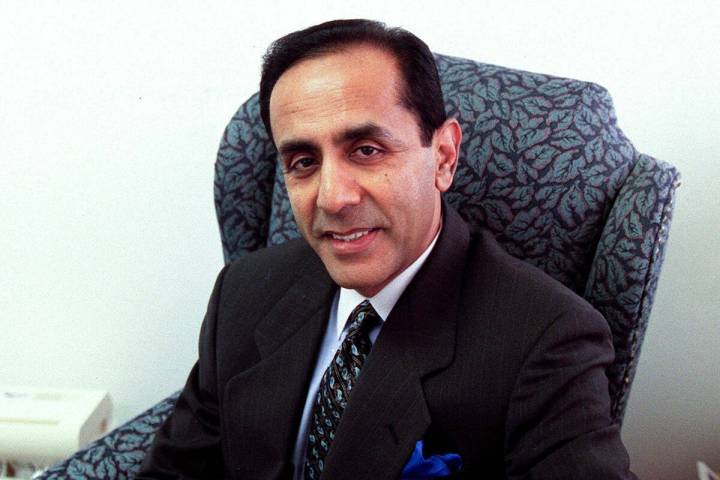
The Internet enables payday lenders, among others, to operate around the country without regard to state lines, said George Burns, commissioner of the Financial Institutions Division.


Most Popular Stories
  • Buyout to take casino parent private
  • Chase makes takeover official
  • REAL ESTATE: Homebuilders hunt for land
  • INSIDE GAMING: Echelon could use some tarp assistance
  • TIVOLI VILLAGE: Work intensifies at mixed-use center, with first phase to open in December 2010
  • CityCenter licensing gets own hearing
  • A FEW OF THE PAST YEAR'S BIG LEGAL CASES: Recession leaves lawyers rethinking strategies
  • Vote paves way for LV-style casinos in Ohio
  • World Series of Poker Main Event - The Final Table
  • BEST PLACES TO WORK: The readers have voted: These Southern Nevada companies know how to keep workers happy


  • "It's definitely a new challenge," he said.

    The proposed rule wouldn't prohibit payday lenders with licenses in other states from making loans where they have licenses, but it would eliminate the problem of payday lenders in Nevada violating laws in other states, Burns said.

    Burns said he often gets complaints from his counterparts in other states but can only suggest officials from the other state take action against payday lenders who violate their laws.

    "Doing business in cyberspace means no rules apply," Burns said.

    The solution: Bar Nevada payday lenders from making any loans over the Internet.

    At a workshop meeting Friday in the Sawyer Building, one payday lender complained that banning licensed lenders from the Internet would drive borrowers to unlicensed offshore lenders. Burns later suggested that wasn't likely given the impracticability of foreign lenders collecting loans in Nevada for as little as $100.

    Mark Thompson of MoneyTree raised a legal objection.

    "I think that creates a significant constitutional problem from extending Nevada beyond the borders of Nevada," he said.

    Burns commented later: "We may have to get an attorney general's opinion on whether (the proposed rule) actually conforms with federal law as far as interstate commerce goes."

    In addition to the proposed Internet ban, Burns received comments on a proposed rule that would more clearly define a statute requirement that payday lenders restrict loans to 25 percent of a borrower's income.

    Burns said the 25 percent limit applies to both principal and interest.

    Some payday lenders objected to another proposed rule that would prohibit them from making a second loan to a client within seven days of a first loan.

    Burns said he wanted to make it harder for a borrower to get on a "debt treadmill" that never ends.

    "Eventually, (borrowers of high-interest loans) end up owing thousands of dollars for a $100 loan," Burns said.

    However, he acknowledged that borrowers often need only walk across the street to borrow money from another payday lender.

    Contact reporter John G. Edwards at jedwards@reviewjournal.com or 702-383-0420.

    Newsvine Digg Fark Technorati reddit StumbleUpon del.icio.us Slashdot Propeller Mixx Furl Twitter MySpace Facebook Google Bookmarks Yahoo! Bookmarks Windows Live Favorites Ask MyStuff myAOL Favorites

    Leave Your Comment 6 Reader Comments
    Terms & Conditions
    The following comments are provided by readers and are the sole responsiblity of the authors. The reviewjournal.com does not review comments before publication nor guarantee their accuracy. By publishing a comment here you agree to abide by the comment policy. If you see a comment that violates the policy, please notify the web editor.

    Some comments may not display immediately due to an automatic filter. These comments will be reviewed within 48 hours. Please do not submit a comment more than once.
    Current Word Count:

    Note: Comments made by reporters and editors of the Las Vegas Review-Journal are presented with a yellow background.

    Report abuse

    joe wrote on November 22, 2008 11:10 PM: It's banking for stupid people. I support it otherwise they'd just be hitting up the responsible people for loans.


    Report abuse

    Me bad with money wrote on November 22, 2008 10:37 PM: Somebody stop me before I borrow again


    Report abuse

    dr.death wrote on November 22, 2008 02:35 PM: I worked for a small loan company a few years back. The people we gave loans to were they type that banks wouldn't touch with a 10 foot pole. When you would run their credit checks, it would come back with so many negative references. You loan them the money, and that would be the last you see of them. If the applicant can not read or will not read what they are signing, why should it be the loan company problems.


    Report abuse

    Jon Schultz wrote on November 22, 2008 09:36 AM: "Eventually, (borrowers of high-interest loans) end up owing thousands of dollars for a $100 loan."

    Anyone who makes an ignorant comment like the above should not be Commissioner of the Financial Institutions Division. At a fee of $25 per $100 borrowed for two weeks, a borrower would have to pay just the $25 fee on a $100 loan (choosing not to pay down any of the principal) 40 times, which would take 80 weeks, to reach $1000 in fees. To reach "thousands" of dollars in fees he would have to do this for 160 weeks or over three years. This has probably never happened to a single individual.

    I know payday lenders are the favorite punching bag these days for politicians, activists, journalists and editorial writers, but how about a little honesty in the matter?

    Oregon recently passed a law which eliminated most payday lending in the state, and a new study shows that people are worse off because of it. See:

    http://paydaypundit.org/2008/11/12/oregonians-hurt-by-rate-cap-law


    Report abuse

    Tim wrote on November 22, 2008 09:24 AM: When you have bad credit this is the price you pay, but if you pay your loan off on time, you only pay a small fee, not thousands of dollars, it's 30 dollars on every one hundred you borrow every two weeks until loan is satisfied. People are so misinformed on payday loans. It's not loansharking, it's just a higher price to pay to get a loan. What ever happened to a free market. The United States has gone socialism!


    Report abuse

    ET wrote on November 22, 2008 09:05 AM: How did loansharking, become legal ?