Business

Seminoles have become a force in Indian gaming

  • Josh Ritchie/Special To The Las Vegas Review-Journal

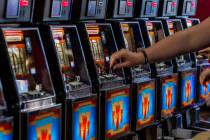
    A casinogoer plays a large slot machine Feb. 2 at the grand opening of the Seminole Casino Coconut Creek's expansion in Coconut Creek, Fla.

  • Josh Ritchie/Special To The Las Vegas Review-Journal

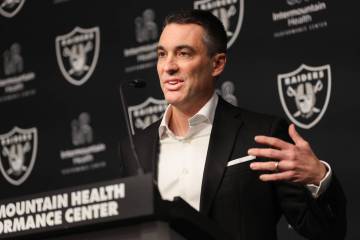
    Seminole Gaming CEO Jim Allen speaks Feb. 2 at the grand opening for the Seminole Casino Coconut Creek expansion. In Florida, the tribe now runs four casinos under the Seminole brand, plus Hard Rock resorts in Tampa and Hollywood.

  • Josh Ritchie/Special To The Las Vegas Review-Journal

    A view from the pool at the Seminole Hard Rock Hollywood in Hollywood, Fla. The Seminoles are now an international gaming and hospitality conglomerate, but Florida is always on their radar.

  • Josh Ritchie/Special To The Las Vegas Review-Journal

    Pedestrians on Feb. 3 pass a video wall at the Seminole Tribe's Seminole Hard Rock Hollywood. The 225 foot-long, 30 foot-high light-emitting diode wall attached to the Winner's Way Parking Garage blasts music videos to passing drivers on State Road 7. The 12-story hotel runs at 98 percent occupancy year-round, with room rates starting at $190.

  • Josh Ritchie/Special To The Las Vegas Review-Journal

    Irene Ruben, right, of Williamsburg, Va., and Jeanette Brenis of Delray Beach, Fla., play blackjack Feb. 3 at the Seminole Hard Rock Hollywood. A Wells Fargo gaming analyst says Seminole Hard Rock Hollywood probably outperforms the Strip's CityCenter complex.

  • Josh Ritchie/Special To The Las Vegas Review-Journal

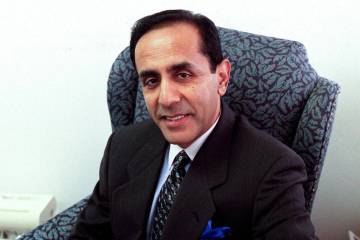
    As president of the Seminole Tribe's board of directors, Tony Sanchez Jr. oversees the 3,700-member tribe's economic development arm and several nongaming businesses.

Correction: 2/15/12 - The ownership of the City of Dreams resort in Macau was misstated in the Business section in Sunday's Las Vegas Review-Journal. It is owned by Melco Crown Entertainment Ltd.
By Howard Stutz
LAS VEGAS REVIEW-JOURNAL
Posted: Feb. 12, 2012 | 2:01 a.m.
Updated: Feb. 15, 2012 | 11:07 a.m.

FORT LAUDERDALE, Fla. -- Sitting in the lounge of NYY Steak in the newly remodeled Seminole Coconut Creek Casino, Tony Sanchez Jr., took a few moments to ponder a question about the nature of the Seminole Indian Tribe's relationship with its home state of Florida.

Sanchez, president of the tribe's board of directors, practically grew up in the casino business. He held senior-level management positions at many of the tribe's six Florida casinos throughout his career and now oversees the 3,700-member tribe's economic development arm and several nongaming businesses.

The Seminoles are now an international gaming and hospitality conglomerate, but Florida is always on their radar.

On Feb. 2, during a seasonably mild winter morning in South Florida, the Seminoles celebrated a $150 million remodel and expansion of its Coconut Creek property with a tribal dance, a medicine man's blessing and parade of a live alligator. Meanwhile, Sanchez's thoughts turned toward Tallahassee, the state capital 450 miles to the north.

The next day, a House subcommittee was to vote on a gaming expansion bill that could ultimately place three destination casino resorts in South Florida. The Seminole Tribe was facing increased competition in its own backyard, where it has ruled supreme since the late 1970s.

The tribe spent hundreds of thousands of dollars on lobbyists, joining a loose and somewhat unusual partnership with Orlando theme park operator Walt Disney Co. in an effort to quash the legislation. The bill's backers included Las Vegas Sands Corp., Malaysia-based Genting Group and other powerful gaming companies.

On Feb. 3, the legislation's primary sponsor in the House pulled the measure after heated discussion, and the vote was canceled. Lawmakers described the proposal as all but dead for the legislative session, which ends in early March.

Chalk up another victory for the Seminoles, who rarely lose when they have home-field advantage.

Twenty-four hours before the vote was canceled, Sanchez was confident the legislation wouldn't proceed.

"The relationship the tribe has with the state is one that works," Sanchez said. "It's one in which we delivered on all our promises. People are going to come in and try and paint this pretty picture of, 'Forget about the whole Seminole Tribe. I can give you more.' But you know what? No one else has been able to deliver to the state of Florida on the scope that we have."

A GLOBAL BUSINESS

Think of the most influential casino operators in the commercial gaming industry. That's what the Seminoles mean to Indian gaming.

"We're sort of like the old E.F. Hutton ad," Sanchez said. "When we speak in Indian country, everyone listens."

He said he's constantly amazed at what the Seminoles have built.

"Never in our wildest dreams and imagination did we think we would be conducting business nationally and internationally," Sanchez said.

Many credit the Seminoles with creating the modern Indian gaming model. It was the first tribe to upgrade from bingo-style slot machines and other low-stakes games to offer Las Vegas-style slot machines, table games, high-end action and fine dining and entertainment.

As other tribes followed their lead, the Seminoles, through expansion and investment, raised the bar again.

The tribe now operates six casinos in Florida -- Brighton and Immokalee in Collier County and Coconut Creek and Hollywood in Broward County, under the Seminole brand, plus Hard Rock resorts in Tampa and Hollywood.

In 2004, the Seminoles signed licensing agreements with Hard Rock International for the Tampa and Hollywood casinos, but they didn't stop there. Three years later, Seminole Gaming Chief Executive Officer Jim Allen engineered a deal in which the tribe acquired all of Hard Rock for just short of $1 billion.

The deal is believed to be the first time an Indian tribe has acquired a major international corporation.

The tribe now owns more than 130 Hard Rock Cafes worldwide, including two in Las Vegas; more than a dozen hotels in four states and seven countries; all of the company's gaming operations except in Las Vegas; and more than 70,000 pieces of rock 'n' roll memorabilia. Seven new Hard Rock hotels are under development in seven countries, including Dubai, United Arab Emirates; Mexico; and Hungary.

Buying Hard Rock International opened the doors for the Seminoles to pursue other business opportunities. The NYY Steak restaurant at Coconut Creek is a joint venture between the Seminoles and Major League Baseball's New York Yankees. The original upscale restaurant is next to Yankee Stadium in the Bronx, N.Y.

Allen said the tribal council was able to see opportunity with the Hard Rock investment.

"We looked at what we were paying for the licensing and we felt we could take the brand to a higher level," Allen said.

The Hard Rock and Seminole properties have similarities in attracting local customers, but the Hard Rock brand is viewed as a destination resort. The Seminole Coconut Creek Casino is about 16 miles north of the Seminole Hard Rock Hollywood, but the property markets to a different customer base, including the residential areas north of the facility.

Because of its empire, the Seminoles are respected and admired within the Indian gaming community.

"They are the 800-pound gorilla," said Victor Rocha, owner and editor of Pechanga.net and a member of Southern California's Pechanga Band of Luiseño Indians.

"When they come into an Indian gaming conference, they have this look about them. They wear these colorful jackets that are part of their tribal heritage. Everyone views the Seminoles with admiration. They are a very proud people because they are successful and they have never had a defeat."

Allen, who has run Seminole gaming since 2001, said the tribe has not abandoned its sense of being. There is still a focus on its Florida home, though it now owns businesses worldwide.

"The tribe has been here for thousands of years," Allen said. "They are the unconquered warriors. When you learn about the tribe and their culture, you realize they have not lost respect for their traditions."

READY TO FIGHT

When Broward County tried to shut down the tribe's high-stakes bingo halls in the late 1970s, the Seminoles took the fight all the way to U.S. Supreme Court and won. The victory reverberated across Indian Country, allowing tribal gaming to spread nationally, with the Florida tribe helping others.

Sanchez was part of the management team that reached out to tribes in Washington state and South Dakota that were starting high-stakes bingo in the 1980s.

"We provided day-to-day management. We helped other tribes by loaning them the capital to build their facilities," Sanchez said. "We did that for a number of years."

In early 2008, the Seminoles signed a new compact with the governor of Florida and began upgrading to Las Vegas-style games, but the state Supreme Court threw out the agreement, saying the compact needed legislative approval. Lawmakers signed off in April 2010, and the U.S. Department of the Interior followed suit two months later. The deal gave the Seminoles the right to operate slot machines outside Broward and Dade Counties for 20 years, and the exclusive right to run some table games in Florida for five years (the Seminole Casino Brighton was excluded). The Seminoles also added poker rooms to all of their casinos.

In return, Florida is to get at least $1 billion from the tribe's gaming revenues over the life of the compact. Allen said the next fiscal year's payment could amount to $234 million.

While the Seminoles dominate Florida gaming, the state is also home to five nontribal racetrack casinos -- often called "racinos" -- that operate slot machines and electronic table games. In 2010, the tracks collected combined gaming revenues of $329 million.

A GROWING CONCERN

Indian gaming revenue results are a closely guarded figure. But here, too, the Seminoles are respected in the industry.

According to Casino City's 2011 Indian Gaming Industry Report, Florida's tribal casinos produced approximately $2 billion in gaming revenues during 2009. The figures included the Seminole properties and a casino operated by the Miccosukee Tribe near Miami.

Seminole Hard Rock Entertainment, which covers the branded restaurants, casinos and hotels, generates annual revenues of $625 million, according to a December report by Moody's Investor Service. That doesn't include revenue from the four Seminole-brand casinos.

Wells Fargo Securities gaming analyst Dennis Farrell Jr. said the Seminole Tribe is one of the few with multiple casinos -- he rates the Tampa and Hollywood Hard Rock properties among the industry's more lucrative -- and said the tribe has "done a tremendous job in leveraging the brand."

For example, the tribe licensed the Hard Rock brand to the Cherokee Tribe of Oklahoma for its Tulsa hotel-casino, while a Hard Rock Hotel is part of the City of Dreams development in Macau, which is owned by Hong Kong-based Galaxy Entertainment.

Tampa's Hard Rock, off Interstate 4 just outside the city limits, is without any gaming competition.

Meanwhile, the Seminole Hard Rock Hollywood is a destination resort and the tribe's flagship. The 500-room hotel and 140,000-square-foot casino are at the back of a 100-acre parcel about a 10-minute drive from Fort Lauderdale's beaches. A lake at the property's entrance features a water fountain-light show. The Hard Rock Hollywood also has the 5,500-seat Hard Rock Live Entertainment Center, 40,000 square feet of meeting space and seven different restaurants and lounges.

Fronting the Hard Rock Hollywood is Seminole Paradise, a 350,000-square-foot outdoor entertainment complex with 23 retail shops, 18 restaurants and 13 nightclubs and lounges. The complex includes the Seminole Okalee Village, which pays tribute to the tribe's heritage and offers shows with live alligator wrestling. The complex's 12,000 parking spaces fill quickly on holidays and busy weekends.

It's hard to miss the Hollywood property -- a 225-foot-long, 30-foot-high light-emitting diode video wall attached to the Winner's Way Parking Garage blasts music videos to passing drivers on State Road 7.

The 12-story hotel runs at 98 percent occupancy year-round, with room rates starting at $190 and ranging to $400 for midsized suites.

The casino has 2,500 slot machines, 97 table games and high-limit gambling rooms. The 40-table poker room in the Seminole Paradise also has three outdoor blackjack tables.

Without knowing the property's financial performance, Farrell is confident that Seminole Hard Rock Hollywood outperforms the Strip's CityCenter complex, which includes the 4,000-room Aria .

"It definitely makes more money (than CityCenter), and it's easily more profitable," Farrell said. "There is nothing else like it in the market. The small racinos can't compete with all the entertainment offerings."

The Seminoles plan to add a 1,000-room hotel tower in Hollywood, and 300 to 500 more rooms at the 250-room Hard Rock Tampa, but is holding off until Florida's casino expansion issues are resolved.

The future of the gaming legislation could also curtail the tribe's plans to convert its Seminole Casino Immokalee into a Hard Rock property on Florida's Gulf Coast by adding a 500-room hotel tower and a championship golf course.

"Even if Florida finally does approve commercial casinos, it will be two to three years before they are built," Farrell said. "The Seminoles are well ahead of the game."

looking toward las vegas

The bright lights of the Strip are a long way from Florida, but expanding in Las Vegas is an intriguing option for the tribe, Allen said.

He said "it wouldn't make any sense to open a Seminole brand casino on the Strip," but added that the tribe is open to working with the Hard Rock Las Vegas, which is now owned by Brookfield Asset Management Inc., a Canadian hedge fund. When the tribe acquired Hard Rock International, the original Hard Rock developer kept the Las Vegas hotel-casino, which subsequently went through several ownership changes.

"I think it's time to enhance the relationship with Hard Rock Las Vegas," Allen said without elaboration.

He said there is opportunity for "10 to 15 new Hard Rock Casinos" and "25 free-standing Hard Rock Hotels in gateway U.S. cities."

The Seminoles continue to be wary of increased competition in Florida.

The casino expansion legislation is expected to be revived in 2013. It might also be brought back to life this year if the Legislature has a special session. A statewide ballot referendum is also a possibility.

"We know it's not going away," Sanchez said.

Contact reporter Howard Stutz at hstutz@reviewjournal.com or 702-477-3871. Follow @howardstutz on Twitter.

Comments

Registration Notice: The Review-Journal has implemented a new registration procedure that requires all existing and new accounts to validate and login using Facebook. Visit the Registration FAQ for more information.
Terms & Conditions

The following comments are provided by readers and are the sole responsiblity of the authors. The Review-Journal does not review comments before publication nor guarantee their accuracy. By publishing a comment here you agree to abide by the comment policy. If you see a comment that violates the policy, please use the Report Abuse button.

Some comments may not display immediately due to an automatic filter. These comments will be reviewed within 24 hours. Please do not submit a comment more than once.

Note: Comments made by reporters and editors of the Las Vegas Review-Journal are presented with a yellow background.

  1. christianberke80 Feb. 15, 2012 | 3:36 a.m. Report Abuse

    GIVE ME A BREAK. The Seminoles have done nothing to help Floridians. They pay no taxes and create very little jobs. They helped blocked the Casino Resort Bill whose loss was a travesty to all Floridians because it had the potential to bring in 100k jobs.

  2. American Gaming Guru Feb. 14, 2012 | 11:05 a.m. Report Abuse

    Great article! Hopefully they go through with their Hard Rock Casino in AC as well!

  3. Tdog Feb. 13, 2012 | 1:47 p.m. Report Abuse

    Brain: Dave is not being necessarily paranoid. Payoffs to winners have been withheld by indian casinos all over the country. True, major companies like Harrahs "manage" the operations. But they have no say in the actual decisions and rules. They can be dismissed at a moment's notice, without cause or recourse. (Ask Boyd). And the "gaming commissions" overseeing the casinos that you refer to are nothing more than tribal councils, whose total mandate is to protect the tribe and never enter an adverse ruling. Finally, as a poker player, you should be aware of the internet poker cheating scandal through the indians in Canada, profiled by Sixty Minutes. Inner circle players were able to see the hole cards of the other players at the table. Not surprisingly, the tribal council refused to allow any prosecutions of the individuals involved. Beware of dealing with the indians. Just ask the architect who designed the Grand Canyon Skybridge.

  4. elveret.odamit Feb. 12, 2012 | 6:50 p.m. Report Abuse

    Glad too see the Semis doing well, American natives have been mistreated on their own land for many moons I may say and it`s time they flourish with mucho moolah. congratulations tribes!!!.

  5. DannyK Feb. 12, 2012 | 12:36 p.m. Report Abuse

    It's interesting that like all the other news organizations you have fallen into the trap of referring to the Florida gambling legislation as gambling expansion. While the bill would have allowed three casinos to be built in South Florida, it would have outlawed the hundreds of storefront slot parlors that have sprung up around the state and restricted any future casino expansion and also brought all casino and gambling regulation under one roof similar to the way casinos are regulated in Nevada. Overall, it probably would have been a reduction in gambling in Florida.

  6. TheBrain Feb. 12, 2012 | 11:51 a.m. Report Abuse

    Dave - don't be paranoid. There is still state oversight from the gaming board and there have been no material issues at indian casinos as opposed to non-indian casinos. Many indian casinos are managed by large gaming companies (e.g. Harrahs casinos in NC, AZ and CA which are indian casinos). On the other hand - I'm not dumb enough to put money in a slot machine hoping and praying for a "jackpot". I play poker where I actually have an advantage. However, it is the slots playing suckers that provide the revenue so they can comp me to stay while I make money so thanks!

  7. Dave Feb. 12, 2012 | 9:47 a.m. Report Abuse

    Sorry I don't gamble at Indian casino, If I hit a jackpot who knows if they'll actually pay off. I've seen it happen before...

  8. detroit1051 Feb. 12, 2012 | 5:24 a.m. Report Abuse

    This piece should be required reading for all Floridians. I don't believe they realize what the Seminoles have accomplished in this state. Howard Stutz, you were here when Coconut Creek Casino had the grand opening of its expansion. I've been there three times since the opening day dust has settled and believe the Seminoles have raised the bar in Florida. Imo, Coconut Creek will become the Seminoles' flagship property in the state. It will attract customers from Palm Beach County, including Boca, as well as northern and western Broward residents. Now that the resort casino bill is dead for this year, I expect construction to start soon on a hotel at Coconut Creek. When that is completed, the Seminoles will have Hard Rock Tampa with absolutely no competition in the area and Coconut Creek appealing to an affluent customer base in Broward and Palm Beach. Then, I think Hard Rock Hollywood will focus its marketing on Miami and the Latin market along with everyone who likes the 5,500 seat Hard Rock Live venue for concerts. Next will be expansion of Immokalee which can corner the market in Naples and Fort Myers. This link from 2009 when the Seminoles were trying to get the Compact approved, shows at least preliminary renderings of planned hotels. Maybe Florida doesn't need WYNN, LVS or CZR to figure out destination resorts in the Sunshine State. http://jobsforflorida.com/files/ITF_iconic.php

Thursday, May 24, 2012
Clear Clear, 78° Weather Forecast