Home Subscribe Las Vegas Review-Journal
  Jobs Cars Homes Shopping Travel Weddings Golf Best of Las Vegas Photo   Search:

RECENT EDITIONS
Sat Sun Mon Tue Wed Thu Fri

News


Charter schools hit snag after a decade

CARSON CITY -- It's been a rough 10 years for supporters of the charter school movement in Nevada.

A decade after charter schools finally won approval from the Nevada Legislature, there are only 22 of them serving just over 6,000 students. That compares with 426,000 students in the state's traditional public school system.

With the State Board of Education's Nov. 30 decision to temporarily halt approval of any new charter schools, except for nine already in the approval process, it might be a while before Nevada is viewed as a state that is receptive to this popular form of educational experimentation.

Charter schools receive state funding and operate as independent public schools. The alternative programs can use tools not available to most traditional schools, such as smaller class sizes and longer school days. They can also choose the direction of the school's curriculum.


Most Popular Stories
  • MOUNT CHARLESTON: Four die in plane crash
  • Two couples died in crash
  • NORM: Steve Wynn goes for mega-yacht
  • FAMILY SERVICES: Three visits preceded boy's death
  • NORM: Kirshner works on big Vegas project
  • NORM: Curtain falling on Stage Deli
  • NORM: Playboy models in state spotlight
  • Body of diver who jumped off 90-foot Lake Mead cliff found
  • NORM: Elvis fan club will have star its way
  • ROAD WARRIOR Q&A: Gasoline price changes out of control


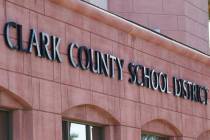
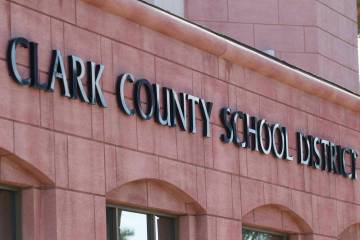
  • The state board's decision followed most of the state's school districts deciding to at least temporarily end sponsorship of new charter schools, citing the time and cost of overseeing them. That includes the Clark County School District, the fifth biggest district in the nation.

    Board members said during a lengthy debate that the Education Department has only one staff member, plus some part-time help, to process the applications and oversee the schools. And with the county districts opting not to sponsor the schools, they expressed concern the agency will be overwhelmed.

    The discussion has come up as a legislatively imposed limit on the number of charter schools has been removed. That, in turn, opened the potential for many more of the schools to operate in Nevada.

    MORATORIUM CRITICIZED

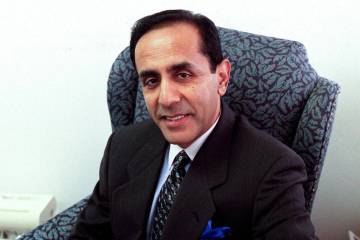
    State Sen. Maurice Washington, R-Sparks, a vocal advocate of the state's charter school law, said the board has exceeded its authority and should not have disregarded the intent of the Legislature, which is to encourage the expansion of the program. Washington is chairman of the state Senate committee dealing with education issues.

    "I am very upset," he said. "I think they arbitrarily made a decision that did not take into account the legislation that we have passed and have been working on for several years. I think in this case they have overstepped their bounds."

    While the board action might have been legal, Washington said the department still has to review charter school applications, so the moratorium won't really save any staff time or money.

    Washington said the financial and staffing concerns expressed by some proponents of the freeze do not hold up anyway because the Legislature agreed to provide funding to school districts and the department for the costs of administering and overseeing the charter schools they sponsor.

    But at least for now, the decision by the state board leaves only the university system and its campuses as an entity that can sponsor a charter school, which was allowed by the Legislature earlier this year.

    Washington questioned whether the Nevada State Education Association, which supported the moratorium, is a force behind the state board decision with the ultimate goal of stopping further charter school expansion.

    TEACHERS WANT OVERSIGHT

    Lynn Warne, president of the teachers union, said Washington is wrong if he thinks the group is opposed to charter schools.

    "We do support charter schools. They fill a unique niche to meet the needs of students," she said. "We just think there should be adequate supervision and oversight so there won't be any improprieties. One staff person is not adequate."

    Failing to manage the schools properly is a disservice to the school itself, students and taxpayers, Warne said.

    Washington should know the importance of oversight, since he was affiliated with a charter school that ran into numerous compliance problems and closed in 2002, she said.

    The Nevada Policy Research Institute, which supports alternatives to the educational establishment including vouchers and charter schools, has also criticized the board's decision.

    "This is a troubling move on the part of the board," said Andy Matthews, the group's communications director. "Charter schools are an important and effective part of our education system because of the freedom and accountability they bring to a system badly lacking in both. This is a vote to deny Nevada's children the opportunity for a better education."

    The group, which calls itself a free-market think tank seeking private solutions for public problems, also questioned the motivation of the board in voting for the freeze. The education establishment "has long been hostile to the idea of giving parents more control over their children's education," Matthews said.

    Jeanne Allen, president of the Center for Education Reform, a Washington, D.C., group that supports charter schools and "anything that works for kids," said the State Board of Education's vote is clearly a reaction to the emerging growth and success of the Nevada program.

    MORATORIUMS CALLED A TACTIC

    Moratoriums have been used historically to slow or stop education reforms such as charter schools when they are on the verge of becoming successful and plentiful, she said.

    "It is very clear the state board's reaction is owing entirely to the fact that charter schools are necessary and in demand and are likely to grow with changes in the law," Allen said.

    With the recent legislative change allowing higher education institutions to sponsor charter schools, the program will expand in Nevada regardless of the board's vote or continued opposition from the education establishment, she said.

    Allen said the vote is also clearly illegal and against the intent of the Legislature, which should respond to the usurpation of its authority.

    John Hawk, executive director of the Nevada State High School charter school in Henderson and a former member of the State Board of Education, said he would have supported the moratorium.

    Hawk said he has concerns with the existing arrangement where the Department of Education advises charter schools on their startup and operation and also has oversight responsibilities. There is an inherent conflict in having both duties, one that could spawn legal challenges, he said.

    SEPARATE COUNCIL URGED

    Hawk said he believes the answer might be a separate council that could sponsor and advise charter schools.

    The fees previously authorized by the Legislature for oversight of charter schools by the Education Department and individual school districts would generate about $560,000 a year that the new council could use to operate so there would be no budget concerns, he said. Then the Department of Education could get back to the business of financial oversight alone, he added.

    Nevada's track record for charter schools appears to be reasonably strong with about a 75 percent success rate.

    Keith Rheault, superintendent of public instruction for Nevada, said about seven of 29 charter schools in the state have closed since the law took effect, sometimes on their own and sometimes by action of a local school district or the state board.

    Financial mismanagement is a frequent reason for an action to dissolve a charter, he said.

    The board voted recently to close two schools in Northern Nevada because of mismanagement issues, which did not involve any intentional wrongdoing, Rheault said.

    While the Legislature did authorize the collection of fees to oversee charter schools, the amount of funding coming to the department for its sponsored schools is not adequate now to hire more staff for oversight, he said.

    That could change next year, when about $168,000 in fees should come to the department, Rheault said.

    If the fees from state-sponsored charter schools materialize in September as expected, the agency should be able to hire another consultant and clerical staff, he said.

    Assemblywoman Bonnie Parnell, D-Carson City, said the idea of a new authorizing agency for charter schools is one of several topics that the Legislative Education Committee will discuss at a meeting Feb. 21 in Las Vegas devoted exclusively to the issue. Parnell chairs the Assembly Education Committee.

    The controversy over the state board's vote to impose a moratorium should fade away if the larger issues over how to ensure the creation of successful charter schools can be addressed by the committee and the Legislature in 2009, she said.

    While other states might have more charter schools -- Arizona has 482, California has 710 and Utah has 60, according to the Center for Education Reform -- there have been questions about proper oversight in some states, including in Arizona, Parnell said.

    "I have to believe we all want to continue to allow charter schools to be authorized," she said. "The challenge is to ensure we have good schools that are fiscally responsible and accountable."

    Contact Capital Bureau reporter Sean Whaley at swhaley@reviewjournal.com or (775) 687-3900.


    Leave Your Comment 2 Reader Comments
    Terms & Conditions
    The following comments are provided by readers and are the sole responsiblity of the authors. The reviewjournal.com does not review comments before publication nor guarantee their accuracy. By publishing a comment here you agree to abide by the comment policy. If you see a comment that violates the policy, please notify the web editor.

    Some comments may not display immediately due to an automatic filter. These comments will be reviewed within 48 hours. Please do not submit a comment more than once.
    Current Word Count:

    Dave L wrote on December 18, 2007 06:26 AM: "If that wasn’t bad enough reverend Washington’s moral code was questioned for his illegal nonpayment of worker compensation insurance for his charter school employees at the Nevada Leadership Academy. The attorney generals office filed a complaint against Washington and he pleaded no contest to the misdemeanor charge. It was his second violation for non-payment of insurance for his workers, consequently, he was fined $70 and paid a $50 court fee. Which means he is a convicted lawbreaker. Is that the kind of moral code the Reno Gazette Journal condones?"

    Read more at washingotnfines


    Dave L wrote on December 17, 2007 09:33 AM: "State Sen. Maurice Washington, R-Sparks, a vocal advocate of the state's charter school law" Didn't/doesn't he run a charter school that got into trouble with irregularities several years ago. Need disclosure on this before citing him.

    John Hawk should know about conflict. Who was the Hawk on the State Board of Education who opened a charter school while on the Board without telling anyone. he then stood for re-election, but after he was exposed promised to resign if re-elected. He WAS elected (voters aren't too astute to what is going on around them even with intense media scrutiny), and then reneged on stepping down from the office. Again, full disclosure on sources will help give the reader a full color background on the views and bias of these 'experts'.