Home Subscribe Las Vegas Review-Journal
  Jobs Cars Homes Shopping Travel Weddings Golf Best of Las Vegas Photo   Search:

RECENT EDITIONS
Sat Sun Mon Tue Wed Thu Fri

News


LISTENING AND THE LAW

Defense attorney accuses authorities of misusing wiretaps

Wiretaps undertaken in 11 years: 80.

Conversations intercepted: 91,496.

Taxpayer money spent: $2 million.

Evidence collected: Worthless?


Most Popular Stories
  • MOUNT CHARLESTON: Four die in plane crash
  • Two couples died in crash
  • NORM: Steve Wynn goes for mega-yacht
  • FAMILY SERVICES: Three visits preceded boy's death
  • NORM: Kirshner works on big Vegas project
  • NORM: Playboy models in state spotlight
  • NORM: Curtain falling on Stage Deli
  • Body of diver who jumped off 90-foot Lake Mead cliff found
  • NORM: Elvis fan club will have star its way
  • NORM: Playboy 'coed': Dad's OK with it


  • Clark County police and prosecutors say they have intercepted more than 29,000 incriminating conversations in 11 years, yet the wiretap recordings usually are hidden -- even years later -- because they are rarely used in open court to prosecute murderers, drug dealers and others.

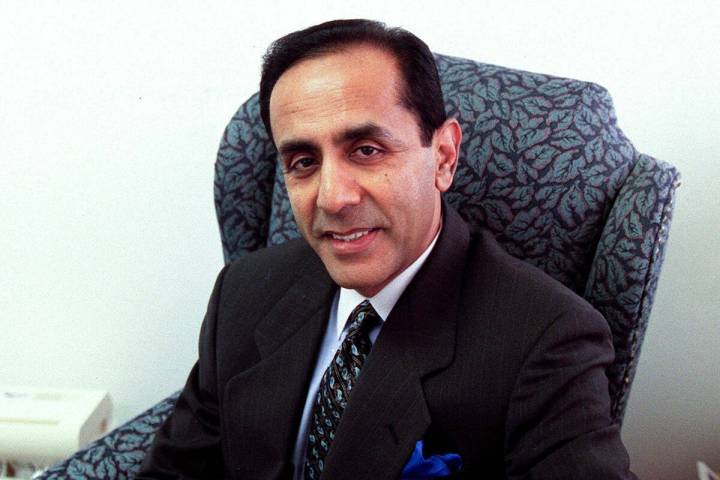
    Now a prominent Las Vegas defense attorney, Dominic Gentile, suggests they are being used, instead, to improperly gather intelligence about alleged crimes for which no wiretap was authorized. Failing to reveal the search results is cheating, he said, because when those other crimes are prosecuted, it denies defense lawyers any chance to examine the wiretap affidavit and question the tap's legality.

    It's also uncertain whether innocent persons intercepted in casual conversations are being notified they've been overheard.

    Las Vegas' situation smacks of that in Los Angeles a decade ago, before California courts and legislators outlawed the law enforcement practice.

    Assistant District Attorney Christopher Lalli supports using wiretaps. In state prosecutions, he said, a wiretap is typically used when less intrusive efforts have failed to solve a serious crime. It sometimes helps solve that crime, even if it fails to produce evidence usable at trial, he said. And if it happens to tip off police to other crimes, he argues, that's a legitimate side benefit.

    In the past three years, since Lalli was promoted to the second-highest post in the district attorney's office, he can't recall prosecutors using wiretap evidence in any criminal case, even though Clark County judges from 2004 through 2007 authorized 31 wiretaps in connection with 18 investigations, according to disclosure forms filed annually by the district attorney's office.

    "It is very rare that we are going to get any evidence that is very relevant. We get so little information on wiretaps. We had one come down yesterday on a murder investigation and we got nothing," Lalli said last month. "If someone has been murdered, you are going to do everything you can legally to solve that crime. Is it a last-ditch effort to get evidence or further an investigation? It absolutely is. Should we go to that extreme? You never know where that one lead is going to come from, and that (wiretap) may be just what you need to solve the crime."

    But Gentile sees it differently. He has represented not only common criminals, but also elected officials and state Supreme Court justices in nearly 30 years before Nevada courts.

    Gentile said the fact that tens of thousands of dollars and a month or more are spent on a single wiretap investigation, combined with the fact the recordings are so rarely unveiled publicly in open court, suggests the wiretaps have been used inappropriately to spy on gang members and others, and apprehend them for crimes not related to the wiretap.

    When that happens, he believes, a false source for information leading to the arrest -- perhaps a "confidential informant" or "routine traffic stop" -- is asserted to conceal its origins in the wiretap.

    Gentile's assertions are rooted in his experience defending a murder suspect, during which the state Supreme Court in 2000 considered wiretap evidence but never ruled on it.

    A prosecutor who requests that a judge authorize a wiretap must submit a sworn affidavit that spells out the crime under investigation and the evidence against the targets. Lying on an affidavit amounts to perjury.

    If the wiretap evidence is never used at trial, the affidavit used to obtain the wiretap, police reports to the judge and other wiretap-related documentation are kept confidential until they are destroyed.

    "If they (prosecutors) don't have to use the (wiretap) recordings as evidence, they are not going to notify the defendant that there ever was a wiretap," Gentile said.

    But, he reasons, "The wiretap is a search, and, if the search is based on an affidavit that is inadequate ... then all the fruits of the wiretap must be thrown out."

    Gentile said he plans to bring his concerns about wiretap investigations to members of the state Supreme Court and state lawmakers in hopes there is an appetite to determine whether wiretaps are being used appropriately.

    Lalli said he has spoken with Gentile about his suspicions, and that there is no evidence to substantiate them.

    Prosecutors and police would "never, never" knowingly deceive a judge by filing a fraudulent affidavit to obtain permission for a wiretap because they would be committing perjury, Lalli said.

    "You don't use wiretaps for intelligence gathering. With a wiretap you have to have a stated objective and you can only pursue what's in the wiretap order," Lalli said. "However, if I am legally there (listening to wiretap) and you (suspect) happen to start talking about this other stuff, it is legally obtained evidence."

    In addition, the wiretap surveillance is hardly a secret, he said. The district attorney is required by law to disclose annually to state and federal officials information about each wiretap, such as the cost, the number of conversations recorded and the number of arrests, trials and convictions resulting from the surveillance.

    TRY AND GET IT

    However, his office doesn't really disclose all of it.

    The Review-Journal requested from the Nevada Department of Public Safety wiretap disclosures for Clark County from 1996 through 2006. After receiving incomplete records, and being told the department is simply a "repository" for the information, the Review-Journal requested the same data from the district attorney's office. The records provided by the district attorney included 2007 figures, but didn't include information from earlier years that must be disclosed.

    With regard to the duration of each wiretap, the number of people and conversations recorded and the cost, the data provided varies from year to year. For instance, that data for 1997 through 1999 wasn't provided.

    The information provided, although incomplete, seems to show that between 1996 and the end of 2007, Clark County judges approved 80 wiretap requests in connection with 50 investigations, and denied only one request. It appears that more than 95 percent of the nearly 29,000 incriminating calls were associated with 10 or fewer of the investigations.

    The most common crimes for which wiretaps were authorized were murder, kidnapping and drug trafficking.

    Wiretaps were active for 1,311 days, or roughly three years and seven months or about 33 percent of the 11-year period.

    But most of the records didn't reveal the number of arrests, trials and convictions associated with each wiretap.

    They did say that five investigations led to trials, which indicates wiretaps were undertaken but that the recordings were rarely used as evidence in a trial.

    The district attorney denied the newspaper's request for Clark County District Court case numbers for wiretap-related prosecutions. With the case numbers, the newspaper could have learned more about the cases, whether the wiretap evidence was used and whether it led to a conviction.

    The district attorney is required to notify people whose conversations are intercepted on a wiretap, whether or not they are the targets of an investigation or are simply a pizza place taking a delivery order. Gentile insists that prosecutors are not sending out the notices as required by law, and are keeping wiretaps a secret as a result; but Lalli insists that notifications have been sent to persons intercepted on a wiretap.

    However, the district attorney denied the newspaper's request for information on the number of notifications mailed in connection with each wiretap, saying state law requires that the notifications be kept confidential.

    If the newspaper had the information, it could compare the number of notifications to the number of persons intercepted, as disclosed on the federal disclosure forms, and determine whether all people intercepted were later told their conversation was recorded.

    'SOMETHING HAPPENING'

    "In an active investigation, while you don't get admissible evidence you can use at trial, you can get strategic information that can help direct an investigation. ... That is the intelligence benefit in it," Lalli said. "For most wiretaps, if not all, you learn information that you otherwise would not have received."

    Police may learn about a criminal suspect's habits, schedule, friends and family members, locations frequented or other information that may not amount to evidence but is helpful, Lalli said.

    Also, Lalli said, laws governing wiretaps don't prohibit police from sharing information on separate crimes they learn about while listening to a court-authorized wiretap.

    For instance, Lalli said, if police learn about "something happening" at 9 p.m. at the corner of Charleston and Third streets, it's appropriate to dispatch undercover officers to the location. If they see a drug deal, police may stop the suspect's vehicle for a traffic violation and perhaps find illegal drugs, Lalli said.

    Lalli conceded he didn't have enough information to determine how many arrests resulted from wiretaps aimed at other crimes.

    If investigators hear that a separate crime has taken place, or is expected to take place, prosecutors are expected to file a "windfall" report with the judge who approved the original wiretap. Windfall reports are very rare in Las Vegas. Since he was appointed assistant district attorney three years ago, Lalli said, the office has submitted one windfall report.

    While no laws prevent police from pursuing a crime they stumble upon during a wiretap, a prosecutor can't apply for a wiretap with the intention of investigating crimes not spelled out in the wiretap order, Lalli said.

    "That would be completely illegal, unethical and improper. That would be an abuse of it (wiretap laws), and we wouldn't do that."

    THE HANDOFF

    Convinced wiretaps are used secretly to spy on suspects, Gentile about a year ago started filing a motion to disclose wiretap evidence in each state case he has handled, even though wiretap evidence was not presented. Years later, the motions, which have been approved by District Court judges, might help a client if it turns out that an arrest hinged on information inappropriately obtained from a previously undisclosed wiretap, he said.

    Gentile acknowledged that investigators can share information inadvertently heard while investigating a separate crime. However, the wiretap must be disclosed, so that the suspect can defend himself against the evidence.

    The police officer is "using that intelligence that he got from a wiretap to be at Charleston and Third, and they will make a bust without ever disclosing that it was a wiretap that led them there," Gentile said.

    "I am guaranteeing you that the reason he is at Charleston and Third is because of the wiretap ... but when he writes up the arrest, he will say he got information from a confidential informant or that he viewed activity that was suspicious to him."

    CALIFORNIA SCHEMING

    The practice, known as "wall building" or "a handoff" among attorneys in Southern California, was reportedly widespread in Los Angeles until defense attorneys filed a lawsuit and a state judge ruled in 2000 that defendants who were not told their telephones were tapped could seek to have their prosecutions overturned.

    California law was changed in response to the lawsuit, and prosecutors now must disclose a wiretap in every case before the defendant enters a plea, said Kathy Quant, a 23-year Los Angeles County deputy public defender who handled the lawsuit against the Los Angeles County District Attorney's Office and the Los Angeles Police Department.

    When her office stopped tracking "wall-building" cases, it had counted 48 in which there was evidence to challenge a wiretap and another 139 cases in which prosecutors refused to deny or admit a wiretap's existence. Some cases were dismissed after prosecutors refused to release the recordings to a defendant, she said.

    "The defendants were denied due process. They were denied their right to challenge the evidence and suppress the evidence," Quant said. "Because (prosecutors and police) had wiretaps, and because they didn't want to disclose them, they let the cases go because they didn't want to turn over the recordings. ... In the recordings there might not only be evidence to get this guy off, but evidence to get a bunch of other guys off as well."

    Quant said "most wiretaps in Los Angeles County" have never been opened, and that the Los Angeles County District Attorney's federal disclosure forms, like those in Las Vegas, included very little information about arrests, trials and convictions before the lawsuit exposed the practice of "handoffs."

    "If there was an arrest, they won't report it because they have handed it off or built the wall around it," she said. "They are lying. There are arrests, but nobody has been told about the wiretap."

    Quant said the lawsuit revealed that police routinely stated on arrest reports, falsely, that information from a confidential informant established the probable cause for making an arrest, so that they could keep secret forever the wiretap recordings.

    Also, prosecutors and even judges, who are expected to provide a check to assure wiretaps are not abused, understood that "confidential informant" was code for a wiretap investigation, Quant said.

    "Nobody followed the law. Nobody looked at the law. It became commonplace that you could deny people their Fourth Amendment rights (against illegal search and seizure). If you wanted a wiretap, all you had to do was ask for it," Quant said.

    One case, which unfolded before cellular phones were so commonplace, showed that the district attorney in neighboring San Bernardino County tapped an unknown number of pay telephones in Los Angeles County after receiving authorization for one wiretap. According to the disclosure forms filed with the federal government: the surveillance cost taxpayers $627,000 and 131,000 conversations were recorded. Only 10 of them were incriminating, and no arrests were ever made as a result of the wiretaps, Quant said.

    In another case, police confiscated money that had been sent from Mexico to Los Angeles. The arrest report stated that a confidential informant told police the money was related to a drug deal. After the wiretap was disclosed, however, it turned out there wasn't an informant and there wasn't any proof in the recordings that the money was associated with drugs, Quant said.

    In other cases, discrepancies were found between arrest reports and information on the recordings. In one narcotics case, it was found that some of $1.2 million confiscated by police went missing, she said.

    In another case, police took money from a suspect's vehicle without his knowledge, and then listened in as the suspect speculated on who stole his money and on getting revenge, Quant said.

    Gentile, during the prosecution of client Heath Iliescu in the late 1990s, encountered a similar reluctance to share the wiretap evidence. Iliescu was facing a possible death sentence after being arrested for putting out a contract on a business partner.

    The trial was delayed while Gentile in 2000 argued before the state Supreme Court that Iliescu's rights had been violated in the way Las Vegas police gathered wiretap evidence against him. Investigators had not used other investigative tools before applying for a wiretap, and prosecutors had not disclosed the wiretap to the targets of the investigation, as the law requires, Gentile alleged at the time.

    While the state Supreme Court considered arguments about the wiretap issue and before a ruling was announced, prosecutors proposed a plea deal that spared Iliescu life in prison or the death penalty. The murder charge was reduced to attempted murder, and Iliescu drew a six- to 15-year prison sentence. The generous plea deal was offered even though prosecutors already had reached deals with an Iliescu accomplice and the hit man hired to commit the murder, in which both agreed to testify against Iliescu. But because Iliescu agreed to plead guilty, the case concluded and the state Supreme Court never ruled on questions surrounding investigators' wiretap practices.

    If the state Supreme Court never formed an opinion, Gentile certainly did.

    "There is damn good reason to believe they are misusing wiretaps," he said. "I can't think of any reason why the state would plead a capital murder case down to six to 15 years, unless they were concerned that the Supreme Court was going to agree that the whole practice employed in these wiretaps ... violated the Constitution."

    Contact reporter Frank Geary at fgeary @reviewjournal.com or 702-383-0277.


    Leave Your Comment 18 Reader Comments
    Terms & Conditions
    The following comments are provided by readers and are the sole responsiblity of the authors. The reviewjournal.com does not review comments before publication nor guarantee their accuracy. By publishing a comment here you agree to abide by the comment policy. If you see a comment that violates the policy, please notify the web editor.

    Some comments may not display immediately due to an automatic filter. These comments will be reviewed within 48 hours. Please do not submit a comment more than once.
    Current Word Count:

    fluffy wrote on April 28, 2008 02:06 PM: Here ya go, vp:

    "The right of the people to be secure in their persons, houses, papers, and effects, against unreasonable searches and seizures, shall not be violated, and no Warrants shall issue, but upon probable cause, supported by Oath or affirmation, and particularly describing the place to be searched, and the persons or things to be seized."

    ANY VIOLATION OF ANYBODY'S 4TH AMENDEMNT RIGHTS IS A VIOLATION TO EVERYONE'S 4TH AMENDMENT RIGHTS.

    Unfortunately, punishing Constitutional violations in this country, at every level, is sorely lacking. Again, if you wish to parade any or all of your business in the public domain, you have that right. Do not, under any circumstances, attempt to undertake the usurpation of any other citizens' civil rights. That is about as unamerican an activity as can exist.

    It's a wonder that more people involved in "official duty" that trample the constitution aren't shot in the face on principle.


    vp wrote on April 28, 2008 08:00 AM: I know I'm a day late and a dollar short, but I have to throw this out there. The day a decent, law-abiding, non-criminal stands up and can produce evidence that they have somehow been harmed by wiretapping, I will change my opinion. That will never, ever happen because they are not wiretapping decent people to frame them, they are intercepting criminals' conversations to gather evidence against them. Fine by me!


    Free Nevada wrote on April 27, 2008 07:38 PM: "He has represented not only common criminals, but also elected officials and state Supreme Court justices in nearly 30 years"

    But no innocent people?


    0u812 wrote on April 27, 2008 07:02 PM: Mark$ they have been doing this since the telephone invention. You say rep. do not follow the constitution, Dem. are the biggest against the constitution. Demoncrats have invented the Political Correct, and lets interpret the constitution to our way.
    i do not care if they listen or not atleast they know where i stand and i hope i make them laugh


    mark wrote on April 27, 2008 05:18 PM:
    VP,JUNIOR

    " A liberal is really just a conservative that just has not been a victim of a crime" If someone is wire tapping you then you are already a victim of a crime!
    Next you will tell me that a Peeping Tom is justifiably as long as it is done in the pretense of fighting crime.


    Junior wrote on April 27, 2008 01:59 PM: Remember that there needs to be "Probable Cause" to get a wire tap. In addition, all other leads need to be exausted. If someone murdered your wife, mother or child....wouldn't you want the police to do everything they can to bring someone to justice? And if they learned of another murder in the process....don't you think that the police should be able to use that evidence? The police have the right to know what bad people are doing. "A liberal is really a consevative that just has not been the victim of a crime."


    mary wrote on April 27, 2008 11:56 AM: How bout this folks. They get the wire taps leaglly and while listening to them hear of a crime to be committed, but since it isnt the crime they are looking for they (the police) do and say nothing to anyone to prevent it (because that would be ileagl) so the crime is then allowed to be carried out because we don't want to "infringe" on the criminals "rights" and while the crime is committed someone you love is killed. Yeah that seems fair to me!! This has nothing to do with Repuplicans vs left wing liberal numb nuts. This has EVERYTHING to do with fighting crime and do that the police need all the help they can get, remember they are not just fighting the criminals they are also fighting the greedy corrupt lawyers who are out there getting RICH off of protecting these cockroachs of society. Sorry if I can't feel bad that privacy's are being taken away from terriost, rapist,kidnappers, pediphiles and murderers. Dont think I will be losing any sleeep tonight knowing that my towns police dept is wiretapping us.


    Mark$ wrote on April 27, 2008 11:25 AM: Don't you love how Republicans who wave the American flag the hardest are the first to throw out what the flag actually stands for, the Constitution. No-one is apologizing for or comforting criminals & terrorists, but cast a glance once again to the wisdom of the Founding Fathers, shall we. Give "the authorities" power to secretly tap phones & email without a warrant, all in the name of "fighting crime" & "national security", and before you know it, both your local district attorney AND the vice-president of the United States will have their super computers listening to ALL of us.


    Vince wrote on April 27, 2008 11:02 AM: I cannot believe my ears, This article states "It's also uncertain whether innocent persons intercepted in casual conversations are being notified they've been overheard". Are they saying, Were not really sure If your 4 the ammendment rights are being violated. Oh yes, and Mr lallie promises that he will spend your tax dollars and also police all procedures 24/7. If All this Does not occur, The DA will not use it in court. Your track record with this process, has been a huge waist of tax dollars. If we are abusing the law in the name of the law, We are no better than the criminal. Every sane person Knows right and wrong. Thanks Vince 42 year resident. I hope we put all the dirt bags away too.


    vp wrote on April 27, 2008 10:49 AM: Mark,

    I'm right here and I say wiretap away! Listen to my calls, you might get bored but I could not care less! I'm all for wiretapping and getting criminals to incriminate themselves. Crime is my enemy, I have no fear of police or law enforcement overhearing my conversations if it helps get scum off the street.


    Read All Comments