Quantcast
Home manage Las Vegas Review-Journal
  Jobs Cars Homes Shopping Travel Weddings Golf Best of Las Vegas Photo   Search:

RECENT EDITIONS
Mon Tue Wed Thu Fri Sat Sun

sponsored by
News


HIGHER EDUCATION EXPENSES: Tuition hike tallied

Proposal would make cost of UNLV above average in West


A 25 percent increase in tuition and fees for Nevada's college students would mean it is no longer cheaper to go to college here than in most other Western states.

Such an increase would put prices here higher than in many surrounding states, higher than at comparable research institutions and higher than the average for public, four-year institutions throughout the West.


Most Popular Stories
  • Three suspects arrested in shooting death of police officer
  • Three suspects arrested in shooting death of police officer
  • FATAL SHOOTING: Police again mourn comrade
  • NORM: Biden finds rank has its privileges
  • Corrections officer dies in collision on U.S. 95
  • Two suspects in officer's slaying could face death penalty
  • Two of three suspects in slaying of officer could face death penalty
  • NORM: Walton: Coach deserved a punch
  • DEADLY HOME INVASION: Police suspect link to family
  • Station Casinos posts $455 million third-quarter loss
  • NORM: 'Girls Gone Wild' creator feels heat


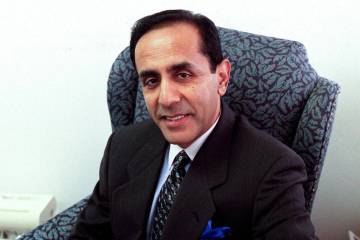
  • Nevada System of Higher Education Chancellor Jim Rogers proposed the large fee increase as one of a series of measures needed to offset looming budget cuts. He also pitched tax increases, borrowing money and a federal bailout.

    Rogers, in one of a series of weekly memos on the budget cuts, called it "no great honor" to have the lowest tuition prices "among our peers."

    "That really sends only one message," he wrote. "The system is once again at the bottom of another 'bad list.'"

    Access to higher education in Nevada has long been an important issue. Fewer than 22 percent of Nevadans over age 25 have a bachelor's degree, according to Census data. That lags below the national average of 28 percent, and ranks Nevada ahead of only a few Southern states.

    But Rogers has long been an advocate of a tuition and fee increase.

    The proposed 25 percent increase would raise about $50 million a year. With the prospect of severe budget cuts on the horizon, administrators fear they might have to slash staff, classes and even entire programs to deal with the cuts.

    Board of Regents Chairman Michael Wixom said the tuition and fee increase will come before the board at its Dec. 4 and 5 meeting.

    "We don't want to do it," Wixom said. "We don't know if we have any other options.

    "We had always seen (tuition and fees) as a way to enhance the programs, not a way of saving the programs."

    Students do not like the idea of paying more for college, but seem resigned to it.

    Student body presidents have pleaded with higher education officials for a rule change that would allow all the money from potential tuition increases to stay with the schools. Currently, most revenue from tuition and fees goes to the state's general fund.

    "It is very difficult for myself or other students to contemplate the potential for such increases given the current condition of many students' finances," UNLV student government president Adam Cronis wrote in a letter to Rogers. "However, given these circumstances, we understand the magnitude of these budget cuts could drastically affect our ability to graduate on time, receive essential academic advising and take the courses which enrich our academic experience."

    Tuition has more than doubled in Nevada and most other Western states in the last decade, even without another increase.

    It costs about $4,500 a year for a Nevada resident to attend the University of Nevada, Las Vegas now, including all fees but not books or room and board. It cost just over $2,000 in 1998.

    Tuition and fees average about $5,100 at Western universities, according to the Western Interstate Commission for Higher Education. An increase here of about 13 percent would put Nevada's universities near the average.

    "It's like a lose-lose situation," said UNLV student Ilonka Zlatar, 20, a junior studying biology. "Not only are you having to pay more for everything, but the economy's down so it's hard to find work, too."

    Zlatar, who hopes to graduate next fall, plans on studying conservation biology after a year in the Peace Corps. She's paying for school through a combination of grants, scholarships and part-time work.

    She said she's already seen the impact cuts can have on campus.

    "They've already cut a lot of classes and they've let go some part-time teachers that were really good," she said.

    She, like other students, suggested cutting peripherals not directly related to education, such as student government, entertainment and security expenses.

    Police, for example, ride around campus on expensive Segway scooters.

    "It's just silly," Zlatar said. "What's wrong with bike cops?"

    Student Thomas Walker, 21, a kinesiology major who wants to be a physical therapist, said an increase in tuition and fees would hurt.

    "It would make it a lot harder for me," he said. "I'd either have to work more, maybe less school, to pay for it. Or I'd have to get a student loan. I'm thinking about it for the first time."

    He's paying for school with a Millennium Scholarship. "It's what I breathe on," he said.

    Freshman Alycia Hayes, 18, who's studying education, said an increase might end her career at UNLV. She's already in debt from student loans, and this is only her first year of school.

    She said her single mom in Long Beach, Calif., is helping her out, along with student loans and a small scholarship. She pays out-of-state tuition, about $15,000 a year, as well as room and board at the dorms.

    "I should have gone to Cal State Long Beach," Hayes said.

    Contact reporter Richard Lake at rlake @reviewjournal.com or 702-383-0307.

    Newsvine Digg Fark Technorati reddit StumbleUpon del.icio.us Slashdot Propeller Mixx Furl Twitter MySpace Facebook Google Bookmarks Yahoo! Bookmarks Windows Live Favorites Ask MyStuff myAOL Favorites

    Leave Your Comment 25 Reader Comments
    Terms & Conditions
    The following comments are provided by readers and are the sole responsiblity of the authors. The reviewjournal.com does not review comments before publication nor guarantee their accuracy. By publishing a comment here you agree to abide by the comment policy. If you see a comment that violates the policy, please notify the web editor.

    Some comments may not display immediately due to an automatic filter. These comments will be reviewed within 48 hours. Please do not submit a comment more than once.
    Current Word Count:

    Note: Comments made by reporters and editors of the Las Vegas Review-Journal are presented with a yellow background.

    Jon wrote on December 02, 2008 02:05 PM: Raising tuition will not give UNLV a better reputation. UNLV's ranking among other universities is based on many factors. Look at SUU in Cedar City, Utah; the Princeton Review has ranked it one of the "best in the west" and their tuition is comparable to UNLV.

    I really wish UNLV would just provide a great education at a great value. If the quality goes up 25% then I would have no problem paying 25% more to attend.

    They have already cut instructors and classes; if they approve this increase are they going to bring back those instructors and add back the classes that should have been there? Also, when we get past this recession will the tuition rates go back down? Not likely.

    This mentality just won't work, by wanting more money. Look at any industry, when they are hurting they make cuts, reduce prices, have sales, etc. Look at the auto industry, you could get a great deal on a new car, but if they were to say, "we need to increase the prices on new cars 25%" what would happen...


    IC wrote on November 25, 2008 07:55 AM: When I see a letter from the student body president that includes the line: "It is very difficult for myself or other students..." I think maybe the tuition should be CUT to apologize for the poor grammar education they are obviously getting.


    bill wrote on November 24, 2008 10:13 PM: Harris,

    The racism is showing through, and Bush has only made it worse. He has made us hated throughout the world.


    CAS127 wrote on November 24, 2008 04:20 PM: "It's just silly," Zlatar said. "What's wrong with bike cops?"

    Bike makers don't pay kickbacks.


    Harris wrote on November 24, 2008 04:09 PM:

    bill wrote on November 24, 2008 06:02 AM:
    The racism of most of the people in this talk back is showing through...

    Bill, you speak of racism all of your life, drive on in life and be somebody instead of everybody supporting you. You are the racist, along with all who have demean the President in the last eight years. Bush will receive $450,000 a year for the rest his life, plus Secret service protection. If he should die his wife will get the money and protection. Love The Bush.


    Universities are service dysfunctional wrote on November 24, 2008 03:48 PM: I can't get over how dysfunctional the educational system operates. There are inequities everywhere.

    My son (who is just 27 yrs) spent 8 years in the Navy, serving his country. He was accepted to the University of Wisconsin, he will major in Nuclear Engineering.

    However he has to delay his start, to establish residency for in-state tuition. I will never forgive university systems for this insulting practice towards our men and women of the armed forces. These ladies and gentlemen are trying to go forward with their lives, and obstacles like these exist. There should be a policy in place that gives these potential students immediate residency wherever THEY CHOOSE after leaving the service, not based on their last post.

    No university system operating with these restrictions gets sympathy or donations from me.


    JP wrote on November 24, 2008 01:22 PM: There are students who have attended, and some who currently attend UNLV, who, I feel, have NO BUSINESS attending a four year university. Some do it to "socialize" (get laid), others, to gain false prestige (I'm smarter than you!), and others because they simply don't know what else to do.
    To be known as the cheapest university in the region is NOT an honor. On the contrary, it gives the university a negative reputation as a low-quality institution in the eyes of those interested in such matters (such as employers).

    I feel raising tuition and fees out of necessity will not, on the surface, negatively affect UNLV. If combined with higher academic standards, a higher tuition could positively ENHANCE THE STANDING OF FUTURE UNLV GRADS, while eliminating students who should not be there.


    Ken wrote on November 24, 2008 12:54 PM: Rogers, the Bernhard Rust of Nevada education, is so far removed from the rest of us that he feels raising rates will somehow add prestige to a system that he is largely responsible for destroying. He needs to spend more time keeping his idiot son Perry from making a fool of himself in daddy's TV station and leave decisions on education to the real professionals.


    Ex-vegan wrote on November 24, 2008 12:08 PM: To Wonder:
    I am an alum of UNLV, and although I went there 2 decades ago, I feel that I did get a quality, well-rounded education. Most of my fellow graduates have gone on to have successful careers (and none are in the gaming industry, either). It also is worth noting that many of the top bosses in the Las Vegas casino industry are also UNLV graduates. UNLV may not have the cache as other better-known state universities. It may have to do with the stigma of being located in Las Vegas. However, UNLV gets an undeserved bad rap. And with any college/university, a student will only get out of it, what he puts into his education.


    The Real Ben Dover wrote on November 24, 2008 12:03 PM: We've completely devaluated higher ed in this country by letting people think it's some kind of right to go to college. It's time to get some of the dead wood out of the classrooms by increasing both the academic standards and the cost. It was great that the post WWII GI Bill sent millions of Americans through higher ed., but it's time to pull back the reins and concentrate on quality....


    Read All Comments