Quantcast
Home manage Las Vegas Review-Journal
  Jobs Cars Homes Shopping Travel Weddings Golf Best of Las Vegas Photo   Search:

RECENT EDITIONS
Mon Tue Wed Thu Fri Sat Sun

sponsored by
News


MILESTONE MARKERS: Sidewalks sidetrack city facts

Historic accuracy gets stepped on with 18 bronze medallions


Some notable milestones in downtown Las Vegas history:

• The first Las Vegas hotel, now the Golden Gate, opened in 1906.


Most Popular Stories
  • Three suspects arrested in shooting death of police officer
  • Three suspects arrested in shooting death of police officer
  • FATAL SHOOTING: Police again mourn comrade
  • NORM: Biden finds rank has its privileges
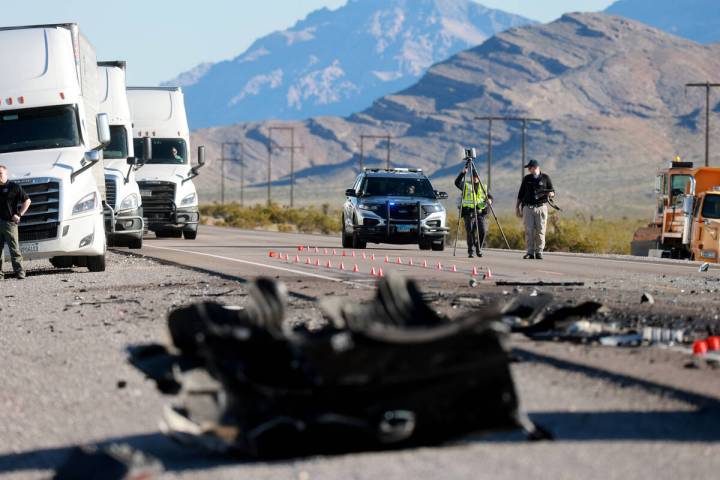
  • Corrections officer dies in collision on U.S. 95
  • Two suspects in officer's slaying could face death penalty
  • Two of three suspects in slaying of officer could face death penalty
  • NORM: Walton: Coach deserved a punch
  • DEADLY HOME INVASION: Police suspect link to family
  • Station Casinos posts $455 million third-quarter loss
  • NORM: 'Girls Gone Wild' creator feels heat


  • • In 1938, saddled horses were banned from inside casinos.

    • And in 1945, Bugsy Siegel bought the El Cortez, where he plotted the Genesis of the Strip -- the fabled Flamingo.

    These bits of history, etched in bronze and set in downtown sidewalks, might make interesting reading. Unfortunately, they aren't true, according to the city's Historic Preservation Commission.

    The city of Las Vegas' zest for promotion has run headlong into historians' fastidiousness for accuracy.

    Eighteen bronze medallions marking major events in downtown and Las Vegas history have been placed in the Fremont East District, where officials hope the valley's next bar-hopping scene takes root.

    Some of the "facts" on those medallions, though, have historians flummoxed.

    They say what is now the Golden Gate was not the first hotel, either in Las Vegas or downtown. There's no historical record that horses, saddled or otherwise, had to be banned from casinos. And despite popular lore, Siegel did not buy the El Cortez, nor was he the visionary behind the Strip.

    Bob Stoldal, chairman of the city's Historic Preservation Commission, thinks those and a handful of other markers containing incorrect information should be replaced with factual medallions.

    "If these are historical markers, they should be accurate," Stoldal said.

    That's not likely to happen, though. City officials say the medallions, which cost $3,600 each, are for entertainment purposes only.

    "If people are getting their history from markers in the sidewalk ..." said Las Vegas City Manager Doug Selby.

    When first informed of the inaccuracies on Wednesday, Mayor Oscar Goodman was outraged. "I'm going to see what we can do, and I'm going to find out who's responsible for this," he said, adding he would consider tearing up the markers.

    The next day, though, Goodman's position had changed.

    "It's a fun thing," he said of the markers. "I'm hoping people on the Fremont East are half-lit, and could care less what the markers say."

    Regarding his earlier pledge to find out who is responsible for the errors, the mayor joked: "That's when I thought there was one (a medallion) about me. I really could care less."

    Officials say some of the information was gleaned from "intense Internet research," among other sources.

    Richann Johnson, with the Office of Business Development, was apologetic to the Historic Preservation Commission recently, but officials have shown no signs of backing down.

    A marker in the sidewalk should not be mistaken for a textbook, they say.

    "Is it necessary to debunk a legend and the mystique that continues to draw 40 million people annually to this part of the desert?" asked Scott Adams, director of the Office of Business Development, in a written statement.

    Mary Hausch, another member of the Las Vegas Historical Preservation Commission, says yes.

    "You don't perpetuate misinformation. History is what it is. If you put something out there as being historical data, it has to be factual."

    The oval- and diamond-shaped bronze medallions bearing "fun downtown facts" and historic milestones are meant to be a small part of the city's $5.5 million reconstruction of Fremont Street between Las Vegas Boulevard and Eighth Street, according to Adams. Renovations to create a budding entertainment district also include wide sidewalks, retro neon signs and palm trees.

    The Office of Business Development went to the Historic Preservation Commission in 2006 to ask for "pithy" historic moments to use on the medallions.

    The Historic Preservation Commission came up with a list of 22 suggestions.

    Among them: that in 1909 the first block of Fremont Street was paved; in 1931 the first gaming licenses were issued; in 1946 Roy Rogers and his horse Trigger visited Helldorado Days; in 1957 Maya Angelou performed at the El Cortez.

    The list, Adams noted in his statement, might not have had "enough interesting, exciting or pithy entries to net 18 good medallions."

    The Office of Business Development contacted College of Southern Nevada historian Michael Green for more suggestions.

    He offered "some dynamic suggestions," Adams said. Then, city staff members did their "intense Internet research."

    The final list was picked and edited by the Office of Business Development and went to the medallion contractor.

    Adams referred follow-up questions to the 3 1/2 page memo he wrote in response to media inquiries. Green wouldn't comment in detail about his contributions.

    David Millman, director of the Nevada State Museum in Las Vegas, and Stoldal generally praised the city's recent focus on preserving its history.

    Millman pointed out that liberties are taken with the facts in tourist destinations across the country.

    "It's not the end of the world. But one of the things we try to do is point out the myths that are around, and point out the historical truths."

    Perhaps the most persistent legend is the impact Bugsy Siegel, a notorious mobster, had in shaping Las Vegas, Millman said.

    "One of the myths that survived quite well is that Bugsy Siegel was this great visionary. It's not true. He gets a lot of credit he doesn't deserve."

    Siegel was part of a group that bought a small share in a number of casinos in 1945.

    Billy Wilkerson, who was the publisher of the Hollywood Reporter in Los Angeles, came up with the idea to build the Flamingo, Millman said. Siegel came in later, with syndicate funding, and took over the project after Wilkerson ran out of money.

    Siegel was whacked a few months later.

    Pedestrians walking on the new sidewalks last week didn't notice the markers until someone pointed them out.

    Christy Valdez, of Southern California, checked out the marker about saddled horses being banned from casinos.

    "It's kind of funny," she said, shrugging when told its truthfulness wasn't fully verified.

    "I'm here to gamble," she said, popping into the El Cortez.

    History, apparently, is still not Las Vegas' biggest draw.

    Newsvine Digg Fark Technorati reddit StumbleUpon del.icio.us Slashdot Propeller Mixx Furl Twitter MySpace Facebook Google Bookmarks Yahoo! Bookmarks Windows Live Favorites Ask MyStuff myAOL Favorites

    Leave Your Comment 1 Reader Comments
    Terms & Conditions
    The following comments are provided by readers and are the sole responsiblity of the authors. The reviewjournal.com does not review comments before publication nor guarantee their accuracy. By publishing a comment here you agree to abide by the comment policy. If you see a comment that violates the policy, please notify the web editor.

    Some comments may not display immediately due to an automatic filter. These comments will be reviewed within 48 hours. Please do not submit a comment more than once.
    Current Word Count:

    Note: Comments made by reporters and editors of the Las Vegas Review-Journal are presented with a yellow background.

    GOD wrote on July 15, 2007 10:38 PM: What do you expect from a city with less than 2% college-educated adults?!

    Why don't they add that the holocaust never happened --- that might open up some eyes to provide people with facts not fiction!

    Gibson continues to prove he's an idiot.