Comments (9) | Add a comment
Cleveland Clinic Ruvo Center adding Parkinson's, MS programs
-
Craig L. Moran/Las Vegas Review-Journal
Dr. Timothy West heads a new multiple sclerosis program at the Cleveland Clinic Lou Ruvo Center for Brain Health. West dedicated himself to multiple sclerosis research after watching his mother suffer with the disease. » Buy this photo
Tools
More Photos
-
Dr. Ryan Walsh, head of a a Parkinson's disease and movement disorders program directed at the Cleveland Clinic Lou Ruvo Center, believes close collaboration between center's researchers in Parkinson's, Alzheimer's disease and multiple sclerosis can help can help unlock the mysteries of brain disease. Craig L. Moran/Las Vegas Review-Journal » Buy this photo
-
Cidney Donahoo rides her bike to battle the symptoms of Parkinson's disease after participating in a movement trial at the Cleveland Clinic Lou Ruvo Center for Brain Health. Jeff Schied/Las Vegas Review-Journal » Buy this photo
LAS VEGAS REVIEW-JOURNAL
Updated: Jul. 11, 2011 | 9:34 a.m.
The air conditioning wasn't working in the family car when Timothy West saw his mother slump over in the front seat, complaining that she felt ill.
The teenage boy's father, assuming that the heat of a Las Vegas summer day had weakened his wife, quickly drove the family to an air-conditioned motel. After being helped inside, she crumpled to the floor.
"She was so scared and so were we," said Dr. Timothy West as he sat inside an office Wednesday at the Cleveland Clinic Lou Ruvo Center for Brain Health near downtown and recalled the day in 1992 that was the beginning of the end of normalcy for the West family. "My mother said as she sat on the floor that she felt as though she had lost control of her body."
Tests would show that West's mother suffered from multiple sclerosis, an often debilitating disease for about 400,000 people in the United States in which the body's immune system eats away at the protective sheath that covers a person's nerves, a process that interferes with the communication between the brain and the rest of the body.
The damage done by the disease has since left West's mother unable to walk, unable to care for herself. Medical bills forced the sale of the family home. Only because West's father has devoted himself to his wife's care is she not in a nursing home.
"What has happened to my mother is the reason I'm devoting myself to research to end this disease and to help those who have it," said the 35-year-old West, who recently completed a prestigious research fellowship into the disease at the University of California, San Francisco, sponsored by the National MS Society. "I feel I have to do something about it. And the Cleveland Clinic Ruvo Center gives me the best opportunity."
In the coming weeks, the center , already respected internationally because of director Jeffrey Cummings' prolific research into memory-destroying Alzheimer's disease, will expand its care outside Alzheimer's to patients with two other disabling brain diseases: an MS program headed by West and a Parkinson's disease and movement disorders program directed by Dr. Ryan Walsh.
Their support staffs include physical and occupational therapists. Social workers will help the patients' caregivers. Psychological and nursing help also is available. Patients will get a chance to participate in the latest drug and therapeutic trials for the diseases.
"We've identified a real need for specialized treatment," Cummings said last week . "What will make our programs unique here is that the integration of clinical trials into our care allows the patients to help solve these brain diseases themselves. No other facility will be as integrated and empowering as this one."
UNLOCKING THE BRAIN'S MYSTERIES
New Las Vegas Mayor Carolyn Goodman was ecstatic when she heard about the Ruvo Center's plans.
"I am so thrilled that we will have these new physicians bringing their expertise and research to Las Vegas," she said Thursday. "These programs ... put us well on the path to becoming an epicenter for cutting-edge medicine."
Walsh trained in the National Institutes of Health MD/PhD program at the University of Cincinnati and pursued fellowship training at the University of Alabama at Birmingham, where he developed an MRI-based analysis of brain networks underlying cognitive dysfunction in Parkinson's disease, which causes an individual to lose the ability to control body movements.
Because Parkinson's, Alzheimer's and MS are all degenerative neurological conditions, Walsh believes the close collaboration of researchers in all three areas at the Ruvo Center can help unlock the mysteries of brain disease.
"That's something Dr. Cummings promised we would do, work collaboratively," said Walsh, who has won highly competitive funding from the Parkinson's Disease Foundation for his research. "That's a big reason why I came here."
The expansion of the Ruvo Center into the full-time treatment and study of diseases that affect thousands of Nevadans and millions of Americans is welcomed by those battling the conditions.
"Up until this time, there has been very limited access to speciality care for MS in Southern Nevada," said Susan Bradley, an executive vice president with the National MS Society office in Los Angeles. Now, she said, the estimated 2,500 people with MS in Las Vegas will have "the highest level of care that's available."
Advances in the treatment of MS are coming quickly, West said. "In 1993, the year after my mother was diagnosed, the first MS drug came out. Now there are eight FDA-approved drugs. Three more just finished trials, and there are four more in the pipeline. We now believe that my mother first showed signs of MS right around the time of my birth because she felt tingling and numbness in her extremities. But then no MRIs were available to show the brain lesions."
PATIENTS SEEK BREAKTHROUGHS
Advances in treatments for Parkinson's is something Cidney Donahoo wants to hear about.
Diagnosed with Parkinson's about a year ago after she developed stiffness and a tremor in her right hand, she is excited about Walsh coming to Las Vegas.
"To have a movement disorder specialist here means a lot," she said. "I'm always looking for ways to treat symptoms without medication."
Donahoo used the Internet to find a Parkinson's disease movement trial that the Cleveland Clinic opened up to patients in Nevada last year. It involved using a stationary bicycle at a speed faster than a person would normally peddle to help relax tight muscles.
That concept worked so well that Donahoo now rides her own bike.
"It helps loosen up my right side," she said.
About 1 million people nationally, and about 1 percent of Nevada's population are estimated to have Parkinson's, according to Walsh.
A literacy specialist in the Clark County School District, Donahoo said biking also helps her deal with the internal tremors of the disease. "When you have specialists in this area, it's easier to be involved in new ways of dealing with the disease," she said.
Another Parkinson's patient, Ken Perrigo, also looks forward to breakthroughs at the Ruvo Center.
"I'm doing pretty good right now," Perrigo said, "but that could end at any time."
Less than three years ago, Perrigo's Parkinson's-induced problems with balance often had him crashing to the floor. To get around the house safely, he began crawling. He was so stiff it would take him nearly an hour to go the short distance from one room to another.
He frequently couldn't get into bed by himself. Trembling and weak, he couldn't cut his meat at the dinner table. Outside, he used a wheelchair to get around.
He took 22 pills a day in an effort to control the tremors and rigidity of Parkinson's, but the medication gave him the same erratic, spastic movements that people associate with the actor Michael J. Fox, who also has the disorder.
And then he underwent a surgery known as deep brain stimulation, where electrodes have been implanted deep in his gray matter to jam dysfunctional signaling in his brain. Now he can walk, play golf and go shopping with his wife.
"It has been a miracle, but nobody knows how long this will last," he said.
Perrigo, who attributes his current good fortune to local neurologist Dr. Eric Farbman and neurosurgeon Dr. Aury Nagy, said he plans on one day consulting with Walsh, as well as his current doctors, to see what other treatment is possible should the benefits of his surgery wear off.
"I want to get the best information I can," he said.
LAS VEGAS CONNECTION
Walsh said he isn't in Las Vegas to steal patients from other physicians.
"We can work together," he said. "Unfortunately, there are so many people with this disease that there are more patients than doctors here can handle. I can be used as a second opinion."
Walsh did say there could be cases where he would refer patients for procedures to the Cleveland Clinic in Ohio, which has neurological expertise that has been ranked sixth best in the United States by U.S. News & World Report. No. 1 in the nation for cardiac care, the clinic is ranked as the fourth best hospital in the country overall.
To be part of an organization that is consistently ranked among the best in the world excites West.
"I'm sure I'm up to the task," he said.
That he ended up in Las Vegas to fight multiple sclerosis makes the native Californian even more curious about life.
"It's difficult to not think something prescient was at work when I end up working to end a disease and caring for people with it at the same place where my mother first had her first bad attack," he said.
Contact reporter Paul Harasim at pharasim@reviewjournal.com or 702-387-2908.
Comments
Terms & Conditions
The following comments are provided by readers and are the sole responsiblity of the authors. The Review-Journal does not review comments before publication nor guarantee their accuracy. By publishing a comment here you agree to abide by the comment policy. If you see a comment that violates the policy, please use the Report Abuse button.
Some comments may not display immediately due to an automatic filter. These comments will be reviewed within 24 hours. Please do not submit a comment more than once.
Note: Comments made by reporters and editors of the Las Vegas Review-Journal are presented with a yellow background.


RSS

I cannot wait until this MS clinic opens, as anyone with MS really appreciates this since it will be the first actual MS specialist in Nevada, hopefully this means I won't have to eventually travel to California to get the help I need as this progresses. And I would like to thank Carolyn Goodman for her contributions to bringing some culture and good medicine to this city which we are in dire need of. By the way to those who think this place is nothing but a money maker I have been getting FREE counseling there to help me deal with this monster, as I cannot afford it even with insurance because they will not pay for it, they would if I was a drug addict though.
I would like to thank Dr. West and all that are devoted in finding, developing and testing new therapies and treatments that could possibly restore . NO REVERSE the symptoms that took away our future. I was diagnosed with MS the spring of 93'.
As I Read this article, I continued to read the comments that were made regarding the Cleveland Clinic. I must have misunderstood its message. All the comments , to me, were people who are not disabled, they just needed to vent on their own misfortunes or to point out someones error. GOD BLESS YOU ALL... TRY MAKING SOME LEMONADE.
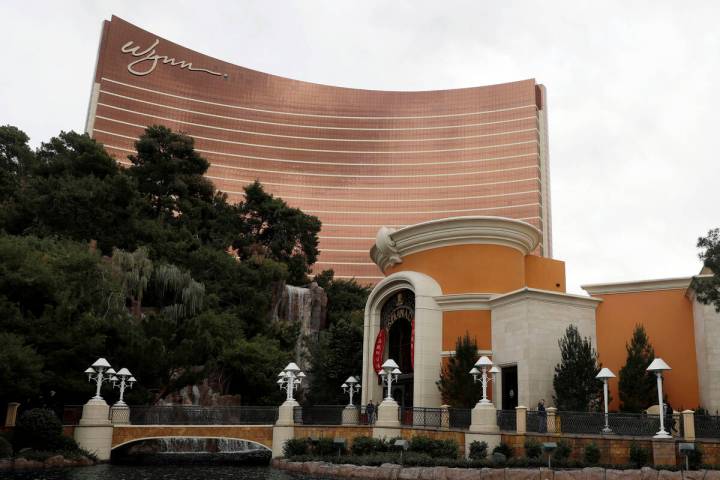
I'm not a doctor but I would like to point out at this time that Las Vegas, Nevada has a first, and we are known to have the most lasts. That building in the background is the Taj Mahal of ugly. It points out the beauty of a tar paper shacks and Navajo Hogans.. ---- Never over estimate the tastes of the City of Las Vegas.
DID GOODMAN HELP GET US THIS TOO?
I don't remember where I originally found that $7.5M sal,
but here's an article which pegs Cosgrove's salary at
$2.1M/y. It also lists the Clinic's Millionaires' Club.
See: http://www.medcitynews.com/2011/02/
cleveland-clinic-millionaires-club-added-2-more-
members-in-2009/
The non-profit Cleveland Clinic pays CEO Toby Cosgrove
$7.5M/y. That's right. Call it "the new charity".
The Mooch Clinic should not be given free land so that it
can pay their empire building CEO (and other insiders)
a fortune. Why not just give the land to Wynn for a new
casino?
The Mooch Clinic probably accepts billions of dollars in
federal money. As such, they should NOT be paying
Cosgrove/Cummings/et al like a MLB All-Stars. The
public-charity sector is NOT supposed to be a place to
get rich.
See http://www.lvrj.com/news/clinics-ceo-wants-to-help-61022627.html
See: [http://online.wsj.com/article/SB10001424052748704493004576001713968286074.html]
Proof.
You want me to depose Cummings, his G&G handlers, plus his clients so as to get some sort of record of what information was passed. Then maybe supoena NYSE/NASDAQ trading records to see who traded what/when.
Sure. I handled an investigation like that all by myself just last week.
I don't happen to believe that insider trading should be a crime. I do get a little indignant however when people sell access to information which doesn't really belong to them.
"That expert role was one where Cummings would give rich investors -- like hedge-fund managers -- an inside scoop of his research findings" Can we assume you can post proof if this?
the center, already respected internationally because of director Jeffrey Cummings' prolific research ..
Cleveland Clinic receives government funding. Cummings probably makes ~$1M/y. Yep.
Academic welfare!
From WSJ: .. when Jeffrey Cummings left UCLA to join the Cleveland Clinic, he gave up his side work as an expert consultant.
That expert role was one where Cummings would give rich investors -- like hedge-fund managers -- an inside scoop of his research findings, ie those likely to cause a publicly traded Biotech firm's share price -- one sensitively correlated to such research -- to jump up/down.
Don't forget, his research was funded by TAX DOLLARS. You think maybe he would have released the inside information in a PUBLIC statement -- after the markets had closed. The article continues:
Cummings .. who consulted for Gerson and Guidepoint, said he typically would get an email from them about once a month asking him if he would be willing to consult for a client, often an investor.
The bill rate must be > $500/hr!
"For the most part, this is information that I carry in my head," said Dr. Cummings, director of the Cleveland Clinic's Lou Ruvo Center for Brain Health. He said he also carries a notebook where he keeps information that is public. "I'm very careful to know what is in the public domain."
That's why investors were paying him the big bucks.
Unbelievable!