Comments (52) | Add a comment
Judge kills water ruling
Tools
LAS VEGAS REVIEW-JOURNAL
Updated: Apr. 10, 2012 | 9:43 a.m.
For the moment at least, the Southern Nevada Water Authority has lost the water it hoped to pump to Las Vegas in the first phase of its proposed pipeline across eastern Nevada.
In a strongly worded order issued last week, a district judge overturned a 2008 state ruling that granted the authority permission to tap groundwater from three valleys in central Lincoln County.
Judge Norman Robison ruled that State Engineer Tracy Taylor "abused his discretion" and "acted arbitrarily, capriciously and oppressively" when he cleared the authority to pump more than 6 billion gallons of groundwater a year from Cave, Delamar and Dry Lake valleys.
The senior judge from Gardnerville wrote that the state's chief water regulator traditionally requires "specific empirical data" before allowing groundwater to be transferred out of a basin. This time, though, the state engineer is "simply hoping for the best while committing to undo his decision if the worst occurs," Robison wrote.
Authority officials are expected to challenge the judge's ruling, which spokesman Scott Huntley described as biased and "flat-out wrong."
"We believe there are numerous grounds for appeal," Huntley said. "There was some evidence the judge may have come into the case with a prejudged opinion."
Las Vegas water officials filed applications in the three valleys in 1989 as part of a grab for unappropriated groundwater across the southern half of the state.
In July 2008, Taylor granted the authority less than half of the water it was seeking in Cave, Delamar and Dry Lake valleys. He ordered the wholesale water agency to develop a monitoring and mitigation program and to collect data for at least two years before exporting any water from the area.
A month later, a group of ranchers, environmentalists and others opposed to the pipeline challenged Taylor's decision.
New Mexico-based attorney Simeon Herskovits represents many of those pipeline opponents. In a statement Tuesday, he applauded Robison for reversing "an obviously unsound decision by the state engineer."
"There can be no doubt that the long-term interest of all Nevadans will be best served by the judge's decision to use common sense and reason in applying Nevada's water law," Herskovits said.
The Nevada Supreme Court would hear any appeal brought by the state engineer's office, the water authority or both.
For now, there appears to be some confusion about how state officials should proceed.
Robison ordered Taylor's decision on the three valleys to be "vacated and remanded for further proceedings consistent with this decision," but officials do not know exactly what that means.
"My understanding is there will either be an appeal or we're right back before the state engineer doing it all again," Huntley said.
"I think we're just digesting it right now to be honest with you," said Susan Joseph-Taylor, the chief hearing officer for the Nevada Division of Water Resources.
A message left for Robison was not returned Tuesday.
By as early as 2013, the authority could start pumping groundwater south through a pipeline that could stretch into White Pine County, more than 250 miles away, and cost between $2 billion and $3.5 billion.
Cave, Delamar and Dry Lake valleys compose the first phase of the project. The water the authority plans to tap there could supply more than 37,000 Las Vegas homes.
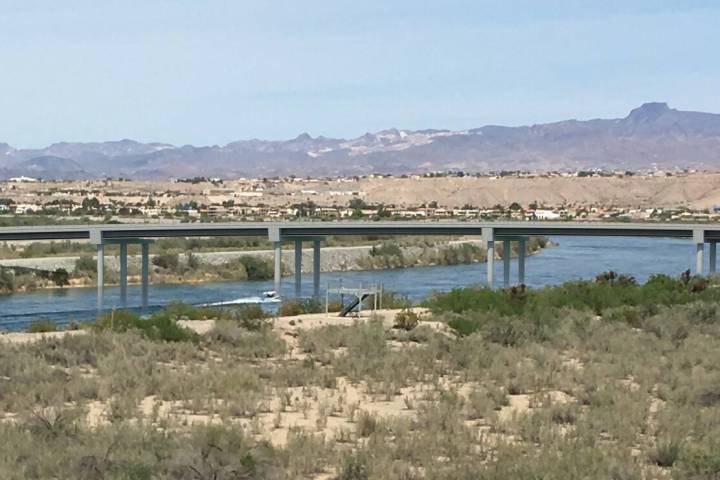
The controversial pipeline was first proposed to feed growth in the Las Vegas Valley, but now it is seen by its backers as an insurance policy for a community that gets 90 percent of its water from a single source: the drought-stricken Colorado River.
Opponents argue that the arid valleys of eastern Nevada cannot sustain large-scale groundwater pumping, which they contend would threaten to destroy wildlife and livelihoods of ranchers and farmers.
In August, water authority board members voted unanimously to forge ahead with the permit process and other preparations for the pipeline.
Authority officials have said they will call for a final vote on whether to the build the project should the surface of Lake Mead slip below 1,075 feet, a low-water mark not seen since 1937 when the reservoir was being filled for the first time.
On Tuesday, the reservoir was holding at about 1,094 feet above sea level.
Contact reporter Henry Brean at hbrean@reviewjournal.com or 702-383-0350.
Trending topics:
Comments
Terms & Conditions
The following comments are provided by readers and are the sole responsiblity of the authors. The Review-Journal does not review comments before publication nor guarantee their accuracy. By publishing a comment here you agree to abide by the comment policy. If you see a comment that violates the policy, please use the Report Abuse button.
Some comments may not display immediately due to an automatic filter. These comments will be reviewed within 24 hours. Please do not submit a comment more than once.
Note: Comments made by reporters and editors of the Las Vegas Review-Journal are presented with a yellow background.


RSS

The state water engineer is doing the best he can with what he has, ie two staff hydrologists. Until more funding is given to expand his hydro department and allow more co operative projects with the USGS, we will never progress beyond the current cycle of flawed rulings and litigation.
DLE, you miss one key historical fact.
Many years ago, there was a huge Federal court lawsuit among the states which border the Colorado River, concerning how much water each of them could use.
Stupid little Nevada, with few people and fewer brains, didn't take the case seriously. When it was settled, we got the right to squat in terms of the right to take water out of the Colorado River.
For many recent years, Nevada has been taking more water from the Colorado River than we are entitled to. In the Bush Administration era, the Feds told Nevada to cut it out, or else.
If Nevada takes more than its share of the Colorado River, a Federal judge has the power to order the Federal agencies to literally seize the water intake plants, and slow them down so that no more water is taken in than is allowed under that settlement agreement. And DLE don't think it won't happen. In the Sacramento area, there is an endangered fish species being killed because too much Sacramento Delta water was being shipped south to the areas around Fresno, Bakersfield and L.A. A Federal court judge issued an order shutting off the water, to save the fish. Federal judges do have tremendous power, and their orders are followed.
In case you haven't noticed, the California Legislature is undergoing an orgy of bloodletting over what to do about the lack of water for all of the people, farms and businesses in the Fresno, Bakersfield and L.A. areas.
So no DLE, Southern Nevada can't keep growing by "taking as much water as it wants out of the river".