News

Keep it simple, UNLV chief says of higher ed funding formula

  • Neal Smatresk
    UNLV president

By Richard Lake
LAS VEGAS REVIEW-JOURNAL
Posted: Jan. 24, 2012 | 5:04 p.m.

The biggest topic in the state's higher education circles right now is the pending rewrite of the funding formula.

This is no small matter. This year, state support to higher education will be nearly half a billion dollars.

The formula, its current form so complicated few people understand it, is what the state's lawmakers use to figure out how much money to allocate to each of the state's colleges and universities.

It is being studied by a committee right now. Proposals are being floated. A consulting group may be brought in.

Which means it is time for the interested parties to pitch their cases.

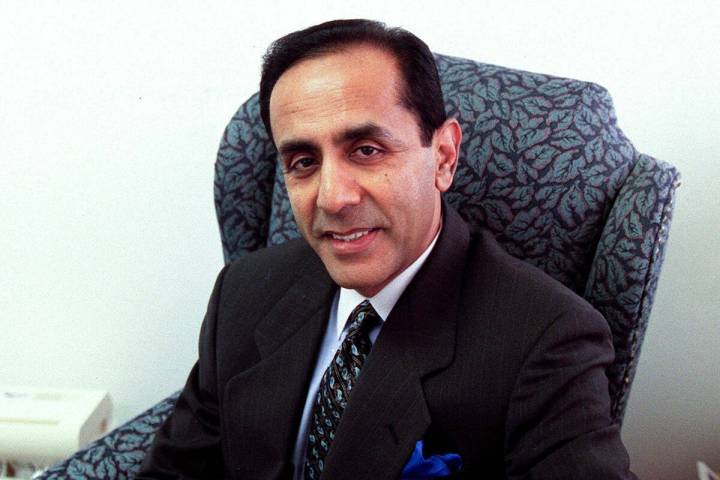
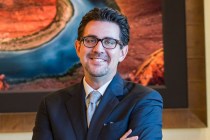
That's what UNLV President Neal Smatresk did Tuesday before a friendly crowd.

"We need to keep it fairly simple, and we need to do it now," he told the university's faculty senate.

The current formula, which has been in place for decades, essentially assigns dollars to a college or university based on how many students are enrolled.

That's a problem, many in higher ed say, for a couple of reasons. First, it costs more to educate some students than it does others. An engineering degree, for example, is lots more expensive to produce than a history degree is.

Second, simply "rewarding" enrollment encourages growth for its own sake, rather than encouraging the colleges and universities to make sure those who enroll eventually graduate.

The state's higher education graduation rates are universally poor.

Third -- and Smatresk said this one is critical -- the funding model now used essentially punishes institutions such as UNLV that enroll large numbers of out-of-state students.

Out-of-state students pay much more in tuition than in-state students do, and UNLV by far has the most out-of-state students in the state, largely because of its highly regarded hotel college.

But the university does not get to keep the tuition those students pay. The way it works now is student tuition and fees raised at an institution are essentially subtracted from the state support that institution gets.

Smatresk said the university "loses" about $14 million a year under this policy. Even if the formula were not going to be rewritten, he said, changing this one piece of the puzzle would benefit UNLV greatly.

"If just that happens," he said, "we will be in much stronger shape than we are now."

Publicly, nearly everyone has expressed at least timid support for a proposal floated by the state's higher education chancellor, Dan Klaich. The proposal, still in its infant form, would reward high graduation rates rather than enrollment, allow the institutions to keep the tuition and fees they raise, and allocate more money for more expensive courses.

Faculty senate President Greg Brown said there were at least two areas of concern. First, whatever form the new formula takes, it must accurately measure the cost of programs. Second, faculty should be mindful of "grade inflation," that phenomenon whereby there is pressure on the faculty to make sure students graduate, regardless of learning.

Privately, nearly everyone is worried that these or other problems with the formula rewrite will crop up.

The people at the universities worry that their higher costs won't be taken into account; people at the College of Southern Nevada worry that its sheer size will hurt it; people at Nevada State College worry that its largely nontraditional student population -- large numbers of poor, minorities and first-generation students -- won't graduate quickly enough or in large enough numbers.

Students worry that a formula rewrite will mean higher tuition and fees, and all three southern institutions worry that nothing will change when it comes to what they see as funding inequities, namely that the majority of state tax dollars are raised in Southern Nevada, but only half the higher ed dollars are spent here.

All of which is why Smatresk encouraged the faculty to get involved.

Contact reporter Richard Lake at rlake@reviewjournal.com or 702-383-0307.

Comments

Registration Notice: The Review-Journal has implemented a new registration procedure that requires all existing and new accounts to validate and login using Facebook. Visit the Registration FAQ for more information.
Terms & Conditions

The following comments are provided by readers and are the sole responsiblity of the authors. The Review-Journal does not review comments before publication nor guarantee their accuracy. By publishing a comment here you agree to abide by the comment policy. If you see a comment that violates the policy, please use the Report Abuse button.

Some comments may not display immediately due to an automatic filter. These comments will be reviewed within 24 hours. Please do not submit a comment more than once.

Note: Comments made by reporters and editors of the Las Vegas Review-Journal are presented with a yellow background.

  1. Buster Bloodvessel Jan. 25, 2012 | 7:24 p.m. Report Abuse

    UNLV produces almost 50% of all college degrees awarded to students in Nevada and receives approximately 33% of the funding "pie."

    Faculty and staff have all experienced pay cuts/furloughs/increased workloads and there has been no Cost of Living Allowance increases in at least three years. There are no unions at UNLV, other than the student union.

    It is always good to see that people never seem to let ignorance get in the way of their opinions.

    Institutions of higher education deliver a range of courses and have different cost bases and to fund them with no regard to costs of operation cannot be considered reasonable or effective in the long run.

    Community colleges do an excellent job in delivering their courses but they do not have the same costs as research intensive universities so to fund them equally makes no sense, unless you don't want higher level degree subjects taught or businesses being attracted to Nevada to partner in research undertaken.

    If people understood better what the issues really are, and what they mean to the wider Nevada community, then there might be a meaningful discussion that makes progress. I applaud Chancellor Klaich for addressing so a challenging issue. It is about time that the people of Nevada and their representatives supported their institutions of higher education.

  2. MIKE VEGAS Jan. 25, 2012 | 3:39 p.m. Report Abuse

    ACADEMIA HAS ALWAYS HATED SPORTS, BUT NONE OF THEM CAN FIGURE OUT A WAY TO RAISE AS MUCH MONEY AS THE SPORTS PROGRAMS DO.--- THUS ENDETH THE LESSON....

  3. MIKE VEGAS Jan. 25, 2012 | 3:36 p.m. Report Abuse

    IT'S ALL ABOUT MONEY. MATH 101, AMERICA 101.-----YOUR CERTIFICATE OF COMPLETION IS IN THE MAIL.

  4. RockNDBakken Jan. 24, 2012 | 10:39 p.m. Report Abuse

    Listen to a pro athlete in an interview, Now tell me that he actually graduated from college. These millionaire morons do not speak ENGLISH and probably could not write a complete sentence. No wonder they have agents, managers, lawyers and accountants. The colleges are nothing more than " auditioning camps" for getting into the pro's millionaire clubs.

  5. Bob_Realist Jan. 24, 2012 | 9:51 p.m. Report Abuse

    "All of which is why Smatresk encouraged the faculty to get involved." Does this mean if the faculty does not get involved and defend him he will ensure they no longer have a job? Smatresk sounds a bit like Jimmy Hoffa except Jimmy Hoffa was trying to represent those who actually worked hard for a living. Somebody please do some simple math and ask simple questions. Ask Neal what his yearly budget is for office furniture. It should be on the spreadsheet provided to the government so a request to release the infb is available to any reporter in Vegas with a spine. If the furniture has not changed in the past decade or so...where did those funds go?

  6. proud democrat Jan. 24, 2012 | 8:33 p.m. Report Abuse

    Libertarians are the ultimate special interest group....only spend on what we value...and nothing else. And they call Obama elitist

  7. n7v.blogspot.com Jan. 24, 2012 | 6:51 p.m. Report Abuse

    it costs more to educate some students than it does others. An engineering degree, for example, is lots more expensive to produce than a history degree is.

    That is such a load of BULL.

    The mission of the University of Nevada is to train the next generation of applied scientists.

    That means degree programs like Engineering, Chemistry, and Microbiology.

    That means lots of courses requiring lab facilities.

    That means recruiting science profsters to teach, unless you think that Musicologists should teach Catalysis.

    The science profsters bring in the grant money, 50% of which (or more) kicks back to the University to pay for things like labs for the science programs and .. intimate sections of English majors studying the short stories of Vladimir Nabakov with an Oxford-educated Litri'chah Profster.

    Unless you think the Materials Science Profster should be teaching musical counterpoint.

    The point is that liberal arts programs are pure burden. Students with declared majors in them should be paying FULL FEE. $800/credit sounds about right.

  8. Bob_Realist Jan. 24, 2012 | 6:02 p.m. Report Abuse

    beachbum, excellent common sense approach and we must also bring back a standard of qualification. If the student, high school graduate, does not meet the minimum standard they must pay for all remedial classes"out of pocket". Zero dollars for remedial classes. This may seem harsh but what ever happened to having to qualify for college? When I graduated high school my grades (2.75 out of 4.0) didn't qualify for college so I took responsibility for my actions/laziness and joined the military. Are we speaking of "Institutions of Higher Learning" or are we talking about "Financial Institutions?"

  9. beachbum71 Jan. 24, 2012 | 5:27 p.m. Report Abuse

    This is easy to fix. Let each college keep whatever tuition, fees, etc. it raises. Then have the state pay a certain amount for every Nevada resident who attends each school.

Friday, May 25, 2012
Overcast Overcast, 78° Weather Forecast