Comments (4) | Add a comment
Organ donation issue surfaces after St. George death
Tools
LAS VEGAS REVIEW-JOURNAL
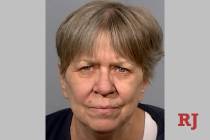
The wishes of a Utah woman to donate her organs before she killed herself outside a St. George hospital Friday might have gone unfulfilled.
Saving solid organs, such as hearts and livers, from someone after a traumatic death is rare, local officials said. But some tissues, such as bone marrow and retinas, can be saved up to 24 hours after death.
Spokesmen for the St. George Police Department and the Dixie Regional Medical Center did not know Friday night whether the 57-year-old woman's organs could be saved. But it was clearly the intent of the woman, whose name has not been released, to donate them.
Police said she called St. George police at 11:39 a.m. local time claiming she was in the parking lot near the entrance to the hospital and wanted to donate her organs. Dispatchers then heard a gunshot, followed by silence.
When doctors from the hospital arrived, they found she had suffered a gunshot wound to the head. They rushed her to the emergency room and tried to save her but were unsuccessful.
The incident echoed the March 2009 death of Charles Bradley Campbell, who walked into the emergency room of St. Rose Dominican Hospital, Siena campus, in Henderson also expressing a wish to donate his organs. He was brandishing a gun and was eventually shot and killed by Henderson police when he pointed it at officers.
Clark County Coroner Mike Murphy couldn't recall Friday whether Campbell's organs were able to be donated, but officials shied from endorsing suicide as a way to intentionally donate organs.
"That is something that we would absolutely not endorse in any way, shape or form," said Ken Richardson, executive director of the Nevada Donor Network, which handles organ donations in Southern Nevada.
In most cases, the efforts probably would not be successful anyway.
The circumstances required to save organs are so rare that of the 2.5 million deaths in America each year, only 10,000 to 12,000 people -- less than half a percent -- are able to become donors, Richardson said.
In Las Vegas, there are usually only 50 to 60 deaths per year in which solid organs can be saved, according to Richardson. For tissues, the number is between 200 and 300.
Rarely do people become donors within minutes of entering a hospital. The most common situation is when a patient suffered some sort of head trauma, is rendered brain-dead and the family has chosen to take them off life-support machines, Murphy said.
If the person was one of the 40 percent of Nevadans who elected to become an organ donor, typically marked on the person's driver's license, then doctors and donation officials can begin doing tests to see which organs would be eligible for donation.
If the person did not choose to be an organ donor, the person's family can make that decision -- about three-quarters of families choose donation, according to Richardson. Many of them find comfort in the fact that their loved one's death helped someone else, he said.
Solid organs such as lungs, livers, kidneys and hearts have to be removed within moments and transplanted typically within six and 36 hours, depending on the organ, Richardson said. Tissues such as retinas, skin, bone marrow and heart valves can be removed within 24 hours after death and can sometimes be stored for years.
For traumatic deaths such as shootings, medical examiners with the coroner's office have to weigh the needs of the autopsy and any potential criminal prosecution with the needs of the organ donation.
"We work very hard to make sure those two don't conflict," Murphy said, adding that his office has a team that works with doctors and donor officials to make those decisions.
Contact reporter Lawrence Mower at lmower@reviewjournal.com or 702-383-0440.
Trending topics:
Comments
Terms & Conditions
The following comments are provided by readers and are the sole responsiblity of the authors. The Review-Journal does not review comments before publication nor guarantee their accuracy. By publishing a comment here you agree to abide by the comment policy. If you see a comment that violates the policy, please use the Report Abuse button.
Some comments may not display immediately due to an automatic filter. These comments will be reviewed within 24 hours. Please do not submit a comment more than once.
Note: Comments made by reporters and editors of the Las Vegas Review-Journal are presented with a yellow background.


RSS

More people should look into whole body donations. This way they can donate their organs, ensure that they're used and it also benefits science. I plan to have my entire body donated to MedCure when I die. They cover all of your family's costs and return your cremated remains. I'm also donating my hair on my 40th birthday.
I'm an organ donor also,except for my liver which might have to be shipped to a toxic waste dump. If someone could benefit from my corneas or skin that would be a good thing as far as I'm concerned.
Your story about Organ Donation highlighted the tragic shortage of human organs for transplant operations.
There are now over 110,000 people on the National Transplant Waiting List, with over 50% of these people dying before they get a transplant. Most of these deaths are needless. Americans bury or cremate 20,000 transplantable organs every year.
There is a simple way to put a big dent in the organ shortage – give donated organs first to people who have agreed to donate their own organs when they die.
Giving organs first to organ donors will convince more people to register as organ donors. It will also make the organ allocation system fairer. Everyone who is willing to receive should be willing to give.
Anyone who wants to donate their organs to others who have agreed to donate theirs can join LifeSharers. LifeSharers is a non-profit network of organ donors who agree to offer their organs first to other organ donors when they die. Membership is free at www.lifesharers.org or by calling
1-888-ORGAN88. There is no age limit, parents can enroll their minor children, and no one is excluded due to any pre-existing medical condition. LifeSharers has over 14,680 members as of this writing, including 100 members in Nevada.
Please contact me - Dave Undis, Executive Director of LifeSharers - if your readers would like to learn more about our innovative approach to increasing the number of organ donors. I can arrange interviews with some of our local members if you're interested. My email address is daveundis@lifesharers.org. My phone number is 615-351-8622.
I also have stated on my driver's license to donate my organs, but I'll let nature takes it course. I'm in no hurry to quicken their departure from said body.