Quantcast
Home manage Las Vegas Review-Journal
  Jobs Cars Homes Shopping Travel Weddings Golf Best of Las Vegas Photo   Search:

RECENT EDITIONS
Tue Wed Thu Fri Sat Sun Mon

Opinion


NEVADA VIEWS: Budget woes and higher education

Academic institutions need to develop more efficient business models

Because of the worst economic downturn since World War II, many state governments now expect revenues to fall in coming years -- resulting in less public spending on higher education. Certain state revenue reforms could moderate the effects of economic slumps on colleges. But higher education institutions also must face reality and become more productive and cost-effective.

First, let's put in perspective the growth of public spending on education. In 1925, the average American family spent 25 percent of its income on food. Today we spend less than 10 percent and get a more nutritious, varied and enjoyable diet.


Most Popular Stories
  • EDITORIAL: Stood her ground
  • LETTERS: Nursery did the right thing with laborers
  • LETTERS: A moral obligation to not bankrupt the country
  • VIN SUPRYNOWICZ: 'Allowed' to carry for self-defense
  • EDITORIAL: Numbers stink?
  • LETTERS: Teachers not most important learning variable
  • LETTERS: Agassi remains a good citizen
  • EDITORIAL: Clunk, clunk
  • LETTERS: Put aside re-election interests for nation's good
  • EDITORIAL: Election results


  • Manufactured goods? A twin-bed mattress and box spring in 1929 cost an average-wage worker 161 hours. Today it is less than 24 hours, and the bed is more comfortable.

    Communications? In 1915, a three-minute, long-distance telephone call cost 90 hours of average work. Today it costs less than two minutes of work, and you can make the call from nearly anywhere.

    Such examples illustrate that technological progress and business innovation, which result from competition, drive down costs while improving quality, value and consumer choice. So, in the long run, each competitive sector of the economy takes a lower percentage of our nation's resources while providing increased value.

    But comparable progress has not been achieved by our colleges, the costs of which -- in both public subsidies and out-of-pocket costs to students and their families -- have continued to rise.

    For example, many people in higher education complain of cutbacks in public support, but according to James Gwartney, Randall Holcombe and Robert Lawson in the fall 1998 issue of the Cato Journal, government spending on higher education as a fraction of our economy more than doubled between 1960 and 1992. And the National Conference of State Legislatures has reported that total spending on higher education increased more than 50 percent between 1991 and 2001.

    Education has benefited from technological progress, especially in information and communications, but practical innovation has been much more limited. While other sectors have seen large drops in labor hours per unit of output, in higher education it is almost an article of faith that students need the same amount or more of live face time with professors from year to year. And administrative overhead seems to grow relentlessly.

    Thus, spending on education, as a fraction of our economy, has increased over time, yet any improvements in quality and cost savings have been limited, at best. Further, although our colleges set the world standard and attract students from around the globe, the quality and value of some of what we offer is suspect, and our continued competitive position is not assured.

    Those who argue for higher taxes to maintain or increase public spending on education should bear in mind that every dollar taken in taxes depresses economic growth and diminishes human well-being. The public interest is best served if public spending is limited to levels at which the social value gained exceeds the social damage done by raising that dollar via taxes. As Daniel J. Mitchell and Michelle Muccio wrote in "Tax Rate Reductions Strengthen the Economy, but Excessive Government Spending Threatens Long-Run Performance," published by the Institute for Economic Policy Studies at the Heritage Foundation, the levels of public spending and taxes that meet that condition are much lower than current levels in almost every state, and more so at the federal level.

    In fact, America's total public sector, including higher education, has expanded from about 8 percent of the economy a century ago to 33 percent today. A lesser public-sector fraction would increase economic growth, with roughly a 22 percent public-sector fraction being optimal, according to Gerald W. Scully, a senior fellow of the National Center for Policy Analysis and a professor of economics at the University of Texas at Dallas, among other experts.

    So, going forward, it would best serve the public interest to arrest the unsustainable growth of the public sector by slowly paring back its share or limiting increases in public spending to the growth rate of the overall economy.

    When people blithely assume that education is entitled to public support at a growth rate above that of the economy (for example, when they ask to be held harmless in an economic downturn), they show they don't understand the central facts and the public interest. Our advocates claim that higher education should be exempt from constraints on public spending because it not only benefits the person being educated, but also raises everyone's quality of life. While spending on education does promote economic growth, so does other private and public spending: Improving one's home raises the neighbors' property values; spending on roads provides various benefits for many people; and so on.

    The upshot is that we in education have no reasonable claim on increases in the rate of public support at or above the growth rate of the economy. Whines of "underfunding" and predictions of disaster if our wish lists are cut do not change that fact. Instead, we have a responsibility to do better than we have been doing.

    A major reason that education's share of the economy has not declined while the value that it has delivered has only modestly improved over the long term is the public sector's inherently defective budget model. That model piles up cost increases for "maintenance" (inflation and scheduled cost increases), "head counts" (more students) and "enhancements" (often noneducational mandates of dubious merit), while ignoring needs for real gains in productivity (more output for fixed or reduced total inputs).

    The rest of the world does not work that way. It works by continuously doing more with less -- not just more with much more.

    Colleges should take heed that technical progress in information and communications has driven innovation in recent years and been a highly disruptive force, devastating old business models as well as organizations and institutions. Just ask folks who work at newspapers or phone companies about this "creative destruction." In each case, new services, products and delivery methods have allowed customers to bypass incumbent providers, many of which subsequently have collapsed.

    Education at all levels could experience the same upheaval in coming decades. We have already seen signs with the rise of for-profit colleges and in certification alternatives to traditional undergraduate degrees, among other indicators. Unless we become more innovative and productive, all the whining in the world, all the pleading for more public support and all the protest demonstrations that can be held will not save us.

    In response to the economic crisis, many states will probably cut or limit appropriations to higher education. In Nevada, Gov. Jim Gibbons, who has supported significant increases for education in the past, has directed all departments to submit budgets that broadly move with the state's falling revenues. He recognizes that colleges should not be a privileged class exempted from the financial pain Nevada families and businesses are experiencing, and that we should not be allowed to add to everyone's distress through higher taxes.

    I agree that public interest requires education to absorb its share of the downturn. At the same time, two budget-reform opportunities should be considered.

    First, Nevada and some other states have volatile revenue streams because they are highly dependent on particular sources -- in Nevada's case, gaming and hospitality. New York has a similar problem with Wall Street, as does California with its reliance on personal and corporate income taxes. And many states are like Nevada in that the most stable source of public revenues, property taxes, is mostly allocated to local governments, not the state. An improvement would be to reallocate the tax revenues between state and local governments so that both levels face the necessary discipline of revenue volatility more equally and in a way that better reflects their economies.

    Second, states need to make larger contributions than in the past to "rainy day" funds so they can improve their abilities to cover any revenue shortfalls during future downturns.

    At the same time, however, we in education should embrace the current budget challenges as an opportunity to begin, out of necessity, to do the things we should have been doing all along. We should reorient our efforts, change operational models, lower costs, improve our product and be more responsive to our changing markets.

    We must shed the barnacles that have accumulated on our ships of educational enterprise and become efficient competitors. We should not waste time and opportunity looking backward and pining for how things used to be.

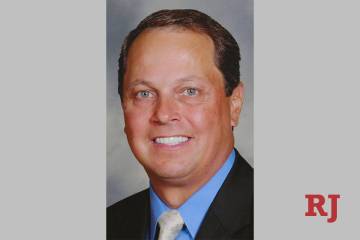
    Ron Knecht of Carson City is an economist, former Nevada assemblyman and chair of the Budget and Finance Committee of the Nevada System of Higher Education Board of Regents. He also has served as an adjunct instructor at Western Nevada Community College. This essay first appeared in the Chronicle of Higher Education.

    Newsvine Digg Fark Technorati reddit StumbleUpon del.icio.us Slashdot Propeller Mixx Furl Twitter MySpace Facebook Google Bookmarks Yahoo! Bookmarks Windows Live Favorites Ask MyStuff myAOL Favorites

    Leave Your Comment 26 Reader Comments
    Terms & Conditions
    The following comments are provided by readers and are the sole responsiblity of the authors. The reviewjournal.com does not review comments before publication nor guarantee their accuracy. By publishing a comment here you agree to abide by the comment policy. If you see a comment that violates the policy, please notify the web editor.

    Some comments may not display immediately due to an automatic filter. These comments will be reviewed within 48 hours. Please do not submit a comment more than once.
    Current Word Count:

    Note: Comments made by reporters and editors of the Las Vegas Review-Journal are presented with a yellow background.

    Report abuse

    Patrick wrote on January 28, 2009 02:19 PM: Why would investment banks move to Nevada when there is a 1.2% payroll tax on them here?


    Report abuse

    Patrick wrote on January 28, 2009 02:18 PM: Vegasquixote,

    Your knowlege of economics is laughable. Eliminating the minimum wage would not mean half the people would work below that amount. That is nonsense. From available data we know that the number of people working on minimum wage was cut in half between 1997 and 2007 despite NO increase in the minimum wage. Wages rose without the magical wand of government.

    Number of people working at the minimum wage cut by 1 million. Number of workers added to the economy in that time 20 million.


    Report abuse

    vegasquixote wrote on January 19, 2009 10:49 PM: Mr. Knecht's neoliberal model is laughable. If it were up to him, half the US would be making less than minimum wage in order to stay competitive against global forces. Mr. Knecht questions that the state may be spending too much money on colleges and universities. How about prisons? Why not question the increased use of prisons for public safety over the last 30 years? Why have incarceration rates climbed? Weren't there better long-term investments to improve public safety?


    Report abuse

    Sad Summerlin wrote on January 19, 2009 03:59 PM: Fed up -

    Orchestra is a proven course that helps in the education of a child. I also remember that students that elect to take orchestra also have to supplement some of the cost associated... Orchestra is NOT the reason we are losing money in the school district.

    patrick -

    You asked a question about Stanford and Choate... I am not sure, but I would guess that Stanford administrators make more than Cal administrators. But not by a sizable margin... Yes... there is some prestige and intangibles also associated with being at Stanford rather than Cal-State Modesto... but, again, I am not sure it is necessarily the finances that are the deciding factor...

    USC and Stanford probably pay the same for their administrators and teachers --- and Cal pays less... but Cal attracts more Nobel Prize winners than Stanford and USC combined...

    As to paying for public school... I am all for it... society is better for us having an educated population...

    More money WILL help education if it is spent correctly and properly... there is no argument in that, patrick... but there is a concept of decreasing returns... and throwing more money without modifying process is foolish... We must change the way we educate to be more competitive and maximize our investments... but few speak of that... many speak only of more investment.


    Report abuse

    FedUp wrote on January 18, 2009 09:45 PM: Jen

    Orchestra? That is why we have outrageous school budgets. That should be private not public expenses. The school system needs to get back to the basics and stop all of this waste on elective and non essential courses.

    Yes, I can say budget cuts. Lets start with orchestra classes


    Report abuse

    Jen wrote on January 18, 2009 07:56 PM: Real world here:

    My daughter is a first year orchestra teacher. There were not enough books this year (can you say budget cuts) there had to be copies made of the music - the copies weren't made right, so she had to GUESS at the last line of the song. Computer class, not enough computers to go around and the ones they have are constantly breaking down. This results in a class that's pretty much WORTHLESS in terms of educational value.

    Pathetic - period. How on earth are we going to compete in a global economy if we can't even give our children the tools they need now. And more cuts on the way!!

    I wish I could afford the 10k plus per year it would take to send my kids to a private school.


    Report abuse

    patrick wrote on January 18, 2009 06:45 PM: sad:

    Questions in general, and my question in particular contained no "logic", it was merely a question.

    And, congratulations for being honest; good for you.

    You're right that private schools are not better MERELY because they cost more, however it is an important factor. Lets face it money buys things including the best facilities, the best talent, and the best equipment. What the students do with those advantages depends on lots of things including their own perceptions of opportunities, their role models, and even their own abilities. I don't think it can be argued that children attending private schools TYPICALLY have role models who have obtained good educations, that the students believe that education will reward them in the future, and that their parents support them in their educational efforts. Each of these components are important and money ALONE will not result in their presence.

    I disagree however, or should I say that your "list" of the reasons private schools succeed is incomplete. Enough harping about "union issues", enough harping about "state issues", enough about "bloated bureaucracies", they are distractions. Do you doubt that private schools like Stanford or Choate pays its administrators and officers salaries FAR in excess of those even contemplated in public schools?

    My point is simply this; don't try to argue that more money DOES NOT lead to improved education, its absurd. Better to argue that they SYSTEM currently in place to teach children, INCLUDING the fact that the pay of the teachers in place CANNOT ATTRACT THE HIGH QUALITY PEOPLE WHO OTHERWISE GO INTO SUCH "NECESSARY" FIELDS AS INVESTMENT BANKING, among other areas that COULD OTHERWISE BE ADDRESSED WITH MONEY.

    Argue that you just don't want to pay for public education, again, at least that is honest. I understand that this is not your


    Report abuse

    FedUp wrote on January 18, 2009 04:07 PM: Kelly

    Kindergarten, Elementary, Middle and High school teacher should be paid at different levels, depending on each teachers experience and past performing records. All of them deserve a good wage, healthcare benefits and a 401 plan with a 4% match from the government. This would save a lot of parents the expense of having to pay child care. The transportation also should be parent responsibility. Parents should also pay a refundable deposit for books if they are returned in good condition. Parents should be totally responsible for all school supplies. Benefit fairs can be held for the ones that cannot afford the supplies. This is just a few fixes that will help.


    Report abuse

    Kelly wrote on January 18, 2009 03:45 PM: FedUp:

    You really want to have teachers work the same number of days at the general public? How much an hour do you think they should be paid?


    Report abuse

    Sad Summerlin wrote on January 18, 2009 03:43 PM: patrick -

    I will answer your question. YES I WOULD! Education is that important to our kids and our future that if I was guaranteed that more funds and more spending would result in better educated students, I would vote to make that investment...

    But here's the problem... your question is flawed because more money spent pure pupil is NOT necessarily the answer to improved education...

    Another bit of flawed logic for your argument... Private schools are not better because they cost more... but because they are more focused, exclusive, learning oriented and less dependent on teacher's unions and bloated government bureaucracies that drain "more money" out of the system than put into education...

    Why do private schools succeed? Because students must be motivated to succeed to maintain status and entry... teachers are focused and less concerned about "union issues" and "state issues" than teaching their students, and finally... because there is a focused administration and defined curriculum that is measured with success and proven results...

    Many public school districts do not have the focus, the dedication and capability of producing good educated students... not because of funding... but because of a myriad of other non-tangible issues...

    So... to answer your question... YES... spend more... but do it right, like the Private Schools do... and then maybe the public will get on board the cost of education...


    Read All Comments