Opinion

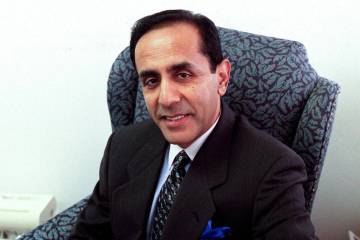
J.C. Watts

The mother of all bailouts to come

Posted: Feb. 28, 2010 | 12:00 a.m.
Updated: Feb. 28, 2010 | 2:31 a.m.

I'm all for bipartisan agreements that make sense. However, when I look at what is unfolding in Congress in the name of bipartisanship on banking reform, it makes me extremely nervous.

Here we go again.

Sens. Chris Dodd, D-Conn., and Bob Corker, R-Tenn., are working on bipartisan legislation to revamp the regulatory structure of the financial services industry. The House passed Rep. Barney Frank's version Dec. 11. The bill from Frank, D-Mass., would create a controversial Consumer Financial Protection Agency and codify a permanent bailout authority for the federal government.

The big question for Americans who hate bailouts is whether the Senate will follow the House's lead and grant the Federal Reserve the statutory authority to bail out individuals, partnerships or corporations to the tune of $4 trillion.

On Page 506 of the House-passed bill, which is titled the "Wall Street Reform and Consumer Protection Act" is the following language: The amounts made available under this subsection shall not exceed $4,000,000,000,000.

This so-called "reform" and "consumer protection" legislation authorizes a $4 trillion bailout fund for Wall Street. That is more money than President Obama's 2011 budget ($3.8 trillion), the gross domestic product of Germany ($3.7 trillion), and between five and six times the amount of the Troubled Assets Relief Program. A majority of House members actually voted for a bill containing $4 trillion in new bailout authority. You just can't make this stuff up. It is really in the bill.

David Reilly, a columnist for Bloomberg News, said the bill "authorizes Federal Reserve banks to provide as much as $4 trillion in emergency funding the next time Wall Street crashes. So much for 'no-more-bailouts' talk. That is more than twice what the Federal Reserve pumped into markets last year. The size of the fund makes the deal-making in the Senate's health care bill look minuscule."

Current law allows the Federal Reserve to open the lending window in "unusual and exigent circumstances." According to the Congressional Research Service, this authority had been used in the past to authorize entities created by the Federal Reserve's Bear Stearns merger and bailout of AIG. Nowhere near $4 trillion has been committed under existing authority.

An explicit authority would be created under the Frank approach to financial services reform to allow the Federal Reserve to make $4 trillion in commitments in unusual and exigent circumstances.

This provides the Federal Reserve with more authority to bail out failing industries without the need for getting the prior consent of Congress. The words "unusual" and "exigent" are vague and ambiguous enough to give the Federal Reserve sweeping new bailout authorities to dispense massive commitments to private and public entities.

Here's how it would work: The Fed would have to make a written determination that a "liquidity event exists that could destabilize the financial system" with a vote of two-thirds of the members of the Financial Oversight Council. The next step would be to secure the written consent of the secretary of the treasury as another condition to the commitment of monies, and the president would have to certify that an emergency exists. The Fed then would authorize a Federal Reserve bank to make a commitment in consideration for "notes, drafts, and bills of exchange" consistent with the order from the Fed, Treasury and the president. The House and Senate would be notified of the action by the Fed. There is a requirement that the secretary of the treasury believes that the funds will be paid back.

I remind you these are all the same entities who were asleep at the wheel in oversight of Fannie Mae and Freddie Mac, allowing them to run amok.

There is a provision for a joint resolution of congressional disapproval, but the commencing of any resolution would not happen until after the commitment of funds had already been made. It is unlikely that members of Congress would be able to unravel any action.

The Senate has the power to run away from this new bailout authority or to embrace it when senators debate financial services reform legislation. The direction that Dodd and Corker take in negotiations on this important issue will have severe ramifications for government policy on the proper role of the Federal Reserve to prop up failing companies in times of crisis.

If this bill passes the Senate with bailout authority intact and gets one step closer to the president's desk, then voters will be mad at yet another abuse of the taxpayers' dollars. The idea of a small and limited government is inconsistent with the idea that the Federal Reserve should have $4 trillion more in bailout authority.

J.C. Watts (JCWatts01@jcwatts.com) is chairman of J.C. Watts Companies, a business consulting group. He is former chairman of the Republican Conference of the U.S. House, where he served as an Oklahoma representative from 1995 to 2002. He writes twice monthly for the Review-Journal.

Comments

Registration Notice: The Review-Journal has implemented a new registration procedure that requires all existing and new accounts to validate and login using Facebook. Visit the Registration FAQ for more information.
Terms & Conditions

The following comments are provided by readers and are the sole responsiblity of the authors. The Review-Journal does not review comments before publication nor guarantee their accuracy. By publishing a comment here you agree to abide by the comment policy. If you see a comment that violates the policy, please use the Report Abuse button.

Some comments may not display immediately due to an automatic filter. These comments will be reviewed within 24 hours. Please do not submit a comment more than once.

Note: Comments made by reporters and editors of the Las Vegas Review-Journal are presented with a yellow background.

  1. Athos Mar. 1, 2010 | 10:34 a.m. Report Abuse

    Don, you are right. Sue and Danny (and really all of them) hire campaign consultants to advise them on what to speak about, so they can get elected (polls show..... talk about this; don't talk about this)

    I can hear Jack Nicholson say, "YOU CAN'T HANDLE THE TRUTH!" So none of them do. The last true politician (that won) that I can think of is Ronnie Reagan. Ron Paul sounds great on domestic spending, but a lunatic on foreign affairs.

    The real problem, I've seen, is the corruption of the American Constitutional limits on government. It's always been about compassion and doing the right thing. Misguided as it is. But this has been an ongoing battle since our country's inception. Our founding fathers knew the corrosive effect of spending other people's money. The lemming mentality of "take care of me" is a real human condition.

    I would like to see a politician tell us the truth. We can't keep spending money we don't have, and placing the tab with the next generation. That is theft. We are not a nation of thieves. Hard times are a'coming. Time to dig out our morality, and turn to "nature's god".

  2. Athos Mar. 1, 2010 | 2:59 a.m. Report Abuse

    So we don't have the politicians with the stones to stop spending. They buy every sob story they hear, open up OUR wallets, and play God. Get suckered like the most gullible rubes, by the worst excuse for con men I've ever seen. My kid could tell they're lying.

    We should hang a few for being traitors to this nation. Tell the rest to get out and leave the money they've stolen ( are you listening Charley Rangel??)

    And please don't bring up Wilson. The only thing he produced of worth was the Harding/ Coolidge presidency.

  3. Winston.Smith Feb. 28, 2010 | 3:00 p.m. Report Abuse

    And some wonder why I call them banksters...

  4. Athos Feb. 28, 2010 | 2:33 p.m. Report Abuse

    The largest creditor we owe in our $13 trillion debt, is ....... the US government. We owe ourselves. All those "excess funds" brought in every year from Social security with holdings, has amounted to $5+ Trillion dollars.

    So if I understand this correctly, we could reduce our national debt by $5+ trillion, and reduce the interest payments on that debt, by simply saying " No More SS payments, the program is done. "

    Is that correct?

    Does Congress have the power to do that?

    If we sacrificed our SS retirement payments, would Congress step up and spend us back into oblivion, or try to live within our means?

    How's that for something to think about?

Saturday, May 26, 2012
Clear Clear, 59° Weather Forecast